
Willesden bus garage to Victoria
Highlights:
- Willesden and Kensal Green cemeteries
- Brent Museum at Willesden Green Library
- Electric Cinema
- Brands Museum
- Pound Lane, Willesden
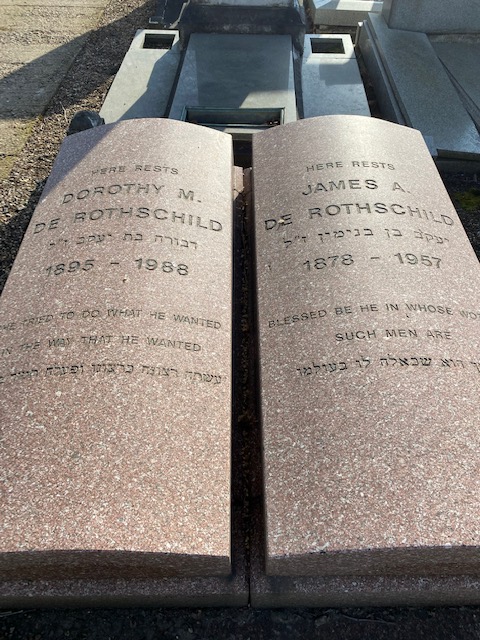
The start of the route is at Willesden Jewish cemetery so before getting on the bus, take a walk round the corner. This cemetery has been a burial ground for London’s Jewish community since 1873, with nearly 30,000 men, women and children being buried here and burials are still being made to this day. Famous burials range from Chief Rabbis to eminent scientists such as Rosalind Franklyn, business people such as Sir Charles Clore and certain members of the Rothschild family. It’s well laid out and they encourage you to walk around and provide good explanations of the customs that are in place.


2. Willesden Green Library
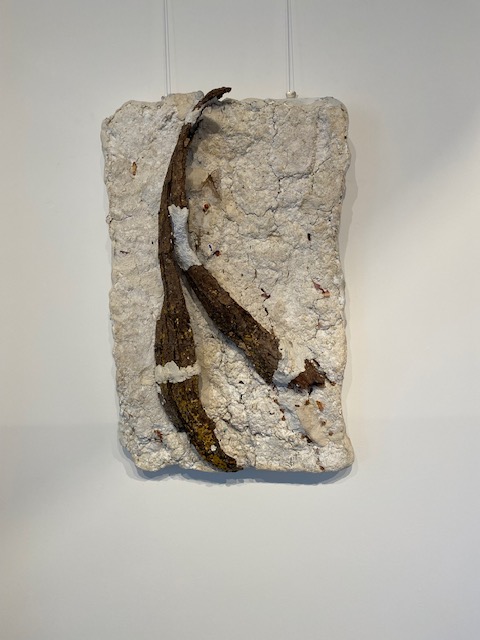
The first stop on this route is Willesden Green library which also houses a small museum and a gallery. In the gallery currently is an exhibition on Art and Sustainability, which is showing work from different London-based artists using mixed media, specifically reused and recycled materials.


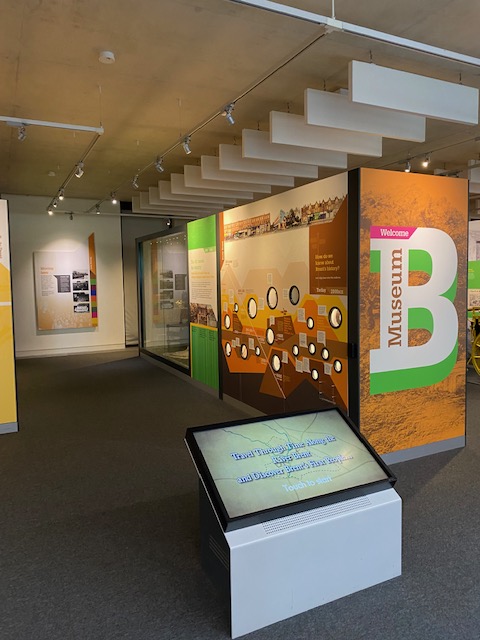
Upstairs in the library is a museum with an exhibition about the borough of Brent. Brent Museum‘s collections reflect working and domestic life in Brent from about 1850 to the present day. It records how different communities came to settle in the borough and the various businesses that emerged over time, as well as giving some insight into famous locals. Marcus Garvey was a prominent pan-African politician who worked tirelessly to empower Pan-African people everywhere. He lived locally to Willesden.


3. Harrow Road/Kilburn Lane
This is the stop for Kensal Green cemetery, which has an awesome entrance gate that you can’t help but notice as you head for the cemetery. It’s vast and if you decide to visit, you will need to prepare beforehand to see where certain people are buried. You should determine whose grave you’d like to see and find out from either the office or Friends of Kensal Green to locate the site of the grave. Several famous people are buried here – Isambard Kingdom Brunel, William Makepeace Thackeray, Wilkie Collins and very many more.


4. St Charles Square
Near the stop is St Michael’s Parish Church North Kensington which is an impressive Victorian building, with a particularly impressive tower. The original builder of the church went bankrupt before it was finished and it was known as Walker’s Folly until such time as it was completed in 1861.


5. Portobello and Golborne Market
Alight here for Portobello Road and its market, as well as the beautiful art deco Electric Cinema. The Cinema first opened on 24 Feb 1910 with seating for 600. Built in the Baroque style, it was one of the first buildings in Britain to be designed specifically for showing films & was one of the first buildings in the vicinity to be supplied with electricity. Its first film was Henry VIII, screened on 23 Feb 1911. It’s changed ownership several times but remains open and has added the property next door which provides a restaurant and extra loos.
Almost opposite is the Ginstitute, a gin distillery which was started by four friends who had amassed a huge amount of gin artefacts and who spent time experimenting until they were ready to open the Ginstitute. These days it’s possible to eat in the restaurant and attend classes in gin-making.


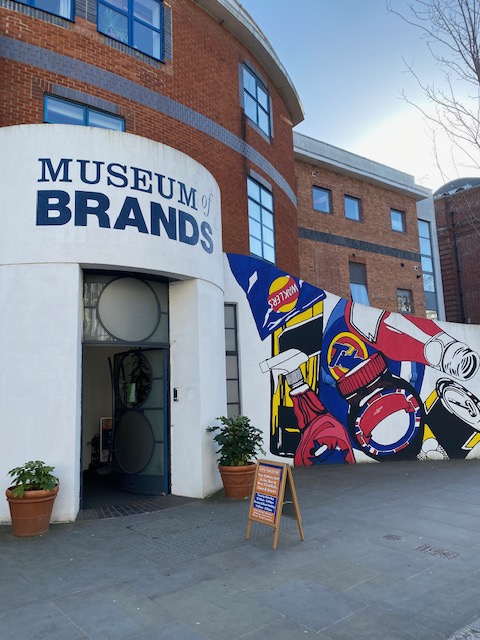
A few minutes’ walk from here is the Museum of Brands. More than 50 years ago, consumer historian Robert Opie started collecting material on how consumer products and promotion had evolved since Victorian times. By 1975 he had enough material to hold his own exhibition, The Pack Age, at the Victoria & Albert Museum and within a further 10 years, he opened the first museum devoted to the history of packaging and advertising. There is an entry fee for this museum , although it has a lovely café and garden, and it’s possible to have a glimpse at some of the extensive brands that are on display.


6. Palace Gate
This is the stop to see Kensington Gardens and to take a stroll along Broad Walk, so named because it really is very wide. Just up from the entrance to the gardens is St Govor’s Well, the inscription on which reads “This drinking fountain marks the site of an ancient spring, which in 1856 was named St Govor’s Well by the First Commissioner of Works later to become Lord Llandover. Saint Govor, a sixth century hermit, was the patron saint of a church in Llandover which had eight wells in its churchyard.”
Amble over the grass to find the bandstand, erected in 1931, replacing an earlier one that had been in situ from 1869. It’s in the Regency style with eight delicate iron columns supporting a curve roof. Queen Victoria gave permission for music to be played in Kensington Gardens in 1855. But before a concert could take place, permission was rescinded because of protests from the Archbishop of Canterbury, who said music in the gardens would be “unseemly”, and the Keeper of the Privy Purse who thought working people could do without band concerts.


7. Rutland Gardens
Final stop of the day is Rutland Gardens, where Kent House is situated. These days it’s an events venue but its history is rich. The first house was built in 1790 and was rented by Prince Edward, Duke of Kent, son of George III – and who named it after himself.
Prince Edward installed his mistress here and had a tunnel built underneath the road linking the house to Kensington Palace, thus enabling secret rendezvous. As he was often in debt, he wasn’t able to keep his mistress here for very long! A succession of distinguished statesmen and authors occupied Kent House until it was demolished in 1870.
Lady Louisa Ashburton was the first mistress of the second Kent House. Later, Lady Noble, granddaughter of the pioneering engineer, Isambard Kingdom Brunel, transformed the first floor drawing rooms into a remarkable Salon and invited leading musicians and dancers to perform. Lady Noble left Kent House in 1940 when, like so many other London landmarks, the needs of war transcended the need for luxury living.
It’s only possible to visit Kent House by pre-booking but it certainly looks as if it’s worth it.
Round the corner is Rutland Gardens Mews and straight ahead is a lovely cottage which has a blue plaque, to inform us that this was once the home of both Margaret Fonteyn and Jacqueline du Pre, though not at the same time. The mews is a lovely cul-de-sac and in fact there are only three residential properties altogether.


There are other places of interest along this route but they coincide with other routes so there will be opportunity to explore them at a later date.
Available toilets that are free to the public on this route:
- Jewish Cemetery Willesden
- Willesden Green Library and Museum
- The Brands Museum
 london routemistress
One response to “Bus route 52”
You have done such a good job here
LikeLiked by 1 person