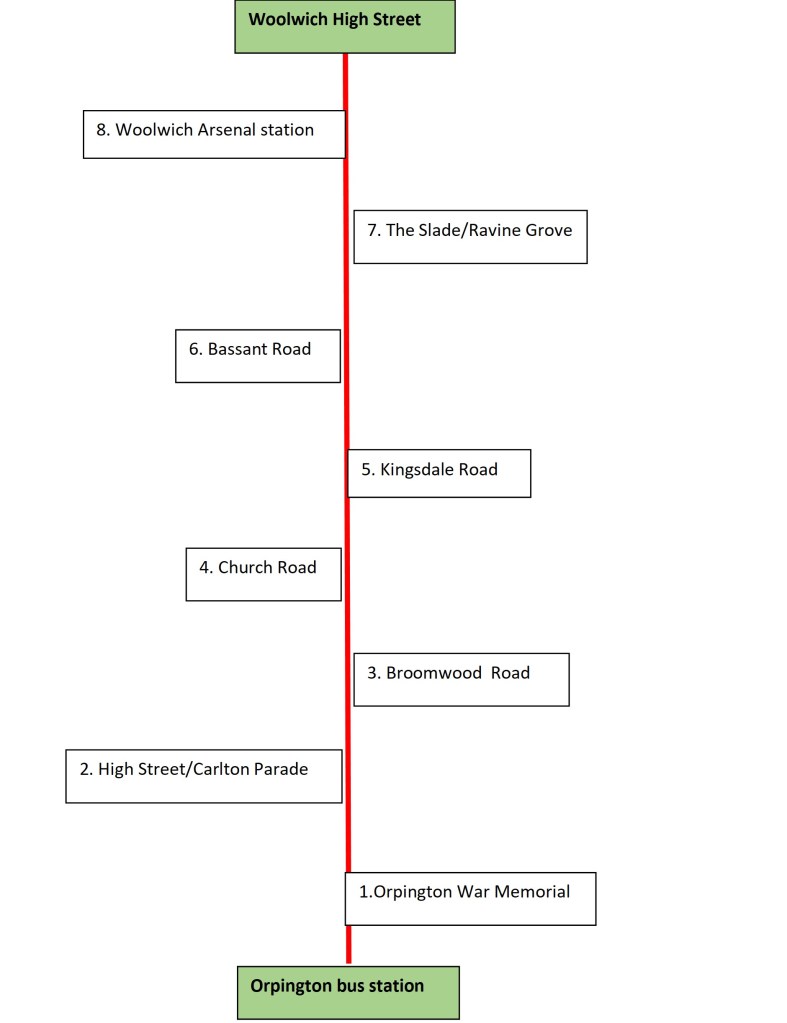
Orpington bus station to Woolwich High Street
Highlights:
- Canadian Corner
- Princess Alice Memorial
- All the area around Woolwich Arsenal
This bus route is entirely south of the river, starting in Kent and finishing near the Thames at Woolwich.
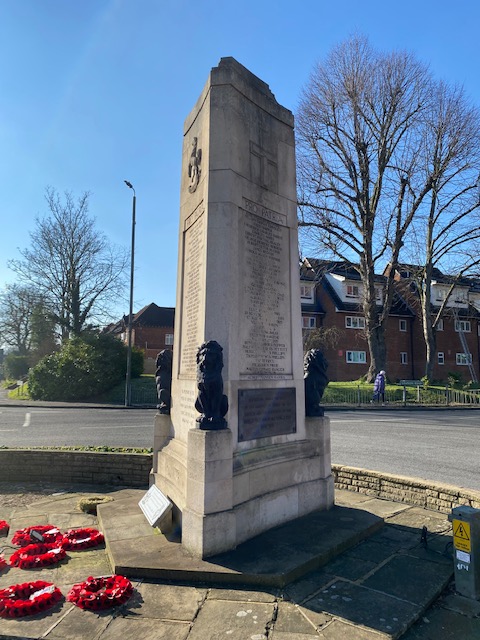
- Orpington War Memorial
The War Memorial is a stone obelisk with bronze lions and plaques set on a roundabout and is Grade II listed. It commemorates men and women from Orpington who died during the 20th century wars, starting from World Wars I and II and including the Korean War and Suez Crisis. It has the names of all 117 and 424 people who died during the 2 world wars.


2. High Street/Carlton Parade
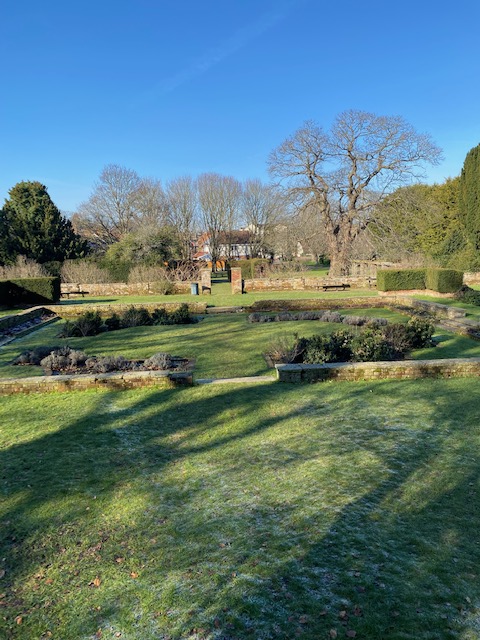
Over the road from the stop is the entrance to Priory Gardens. There is a lot to see here apart from the gardens themselves which are beautiful, even in the winter. The gates at the entrance date from the 18th century and are now hung between high C20 brick wings. The main building inside the park was originally The Priory and is now an Infants’ School.
The gardens are walled and divided into individual compartments, with grassed terraces, lawns and a parterre garden. The steps to the south survive from the 1920s and a further set of steps are dedicated to the memory of Mr and Mrs Hughes, the last private owners of the Priory 1919-1941.


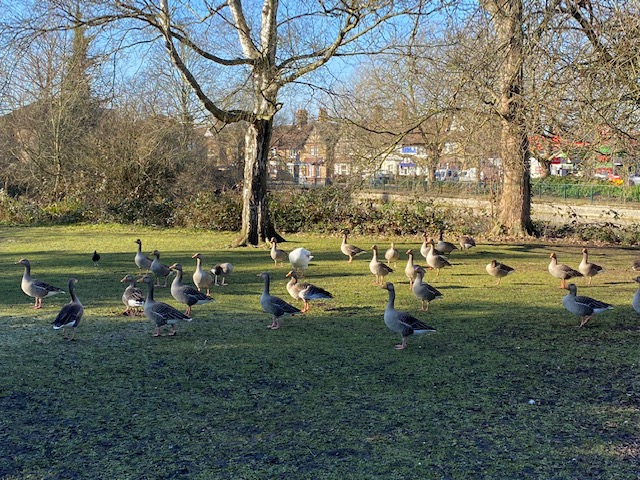
Also within the Gardens are two lakes that have a host of birds, predominantly geese, that are very noisy but seemingly harmless.


Taking a different exit from the Gardens, on the way to All Saints Church, is the Bromley Millennium Rock. This metamorphic boulder of Lewisian Gneiss is over 2,000 million years old and comes from Lochinver in NW Scotland. It was presented to the people of Bromley by the Highland Council to commemorate the Millennium year.
All Saints Church is around the corner and as is often the case these days, it wasn’t open to the public. However, within the extensive grounds is a large cemetery and one part of this is dedicated to the Canadians and is located at Canadian Corner. Orpington Hospital was originally built and paid for by the Government of Ontario in Canada, as a practical war effort during the First World War. Over 26,000 soldiers received treatment at the hospital. 182 died, and of these 88 Canadians, 23 British and 5 Australians who lost their battle for life are buried in this corner of the churchyard.


3. Broomwood Road
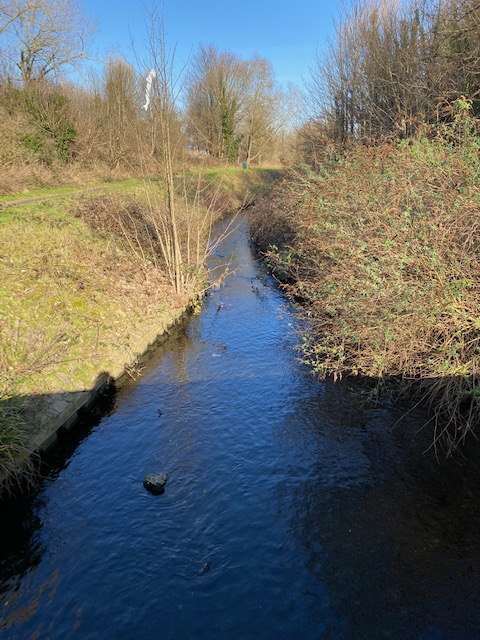
Orpington has a lot of lovely outdoor spaces and the next stop was no exception. Water Meadows Open Space is small but very pretty, with some benches to sit on to look at the river Cray or watch the birds and is only a short walk from the bus stop.


4. Church Road
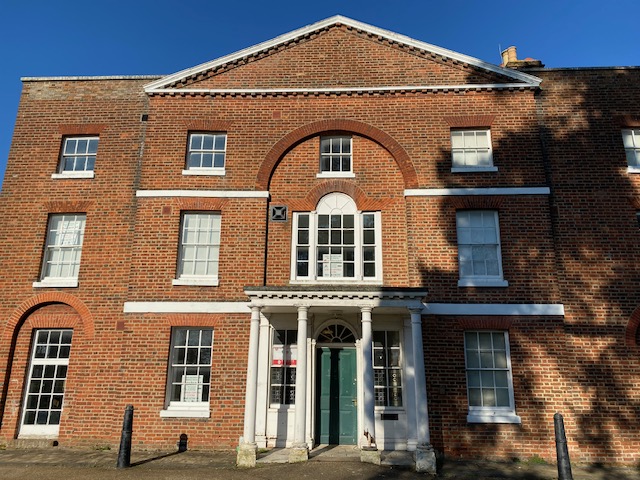
At this stop there is another memorial – this one being Sidcup War Memorial. This memorial commemorates the residents of Sidcup who were killed or missing in World War I (208 names) and World War II (138 names). Close by is the old Sidcup Manor House that sadly isn’t in use any more. It was built around 1790 and was a private residence until 1911 when it became a school until 1939, then a nursing home until 1950. For the next 65 years, it was used by the London Borough of Bromley as council offices and the register office. It had been used as a venue for events but currently, it has been left unoccupied.


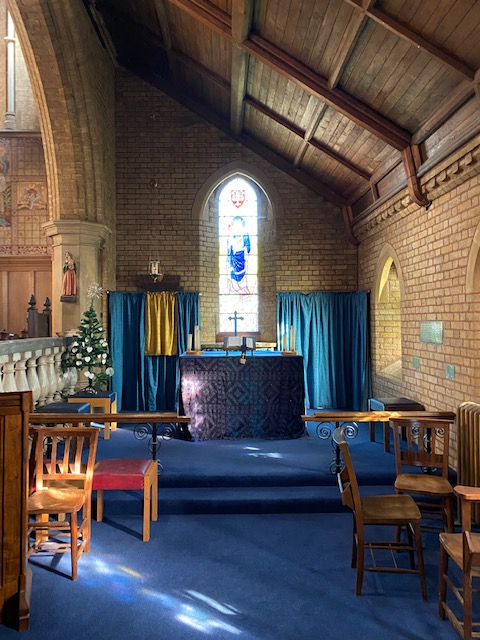
Walking back towards the bus stop is St John the Evangelist church. The church as it stands today was built in 1900, and was large enough to accommodate the growing population in Sidcup. It’s an awe-inspiring building and in particular it’s worth looking out for the splendid stained glass windows that can be seen throughout the length and breadth of the church. There are many areas that catch the eye, including the Ladies’ and Memorial Chapels and the organ.


5. Kingsdale Road
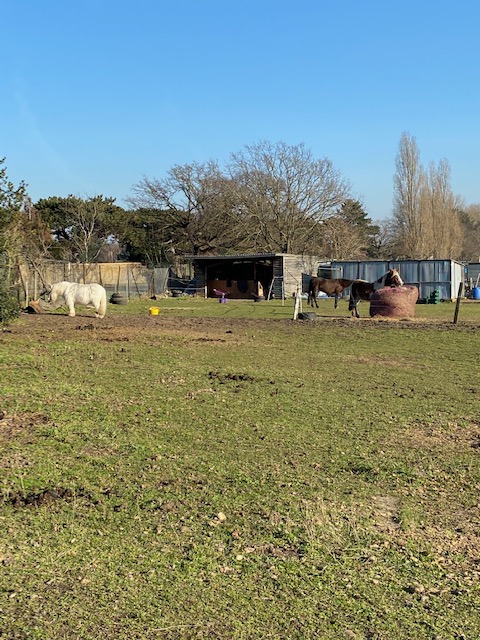
From this stop, walk towards Rockliffe Gardens and you’ll pass by a field in which a few horses are grazing. Rockliffe Gardens have ornamental rocks, waterfalls, two ponds and a rich variety of plants. As the plants have become more established, all sorts of insects, birds and other wildlife have found their way to the gardens.

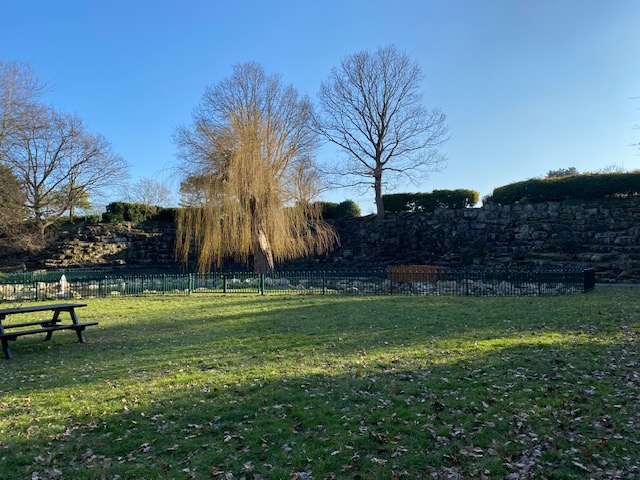
From here, it’s a stroll to the Princess Alice Memorial, erected to commemorate the 550 men, women and children who drowned off the saloon steamer “Princess Alice” which was returning from a pleasure excursion. It was wrecked off Tripcock Point by collision with the steam collier “Bywell Castle” on the night of September 3rd 1878. One hundred and twenty were buried near this memorial.

6. Bassant Road
Intriguingly, there is a Pashupatinath Temple at this next stop, which is the first of its kind established in Europe by people of Nepali origin. The main objective of the Pashupatinath Temple is to promote both the culture and the philosophy of the Hindu faith and other omkara religions to its members and the community at large.
The Temple is on a corner of the nearby Winn Common which is reputed to have been settled by ancient Britons. On the way to the common is the George Webb Memorial Fountain that was erected in 1896 in memory of Webb, who had been the headmaster of Burrage Grove Boys School.


7. The Slade/Ravine Grove
Between Winn Common and Plumstead Common is the Slade Ravine. It was formed at the end of the last Ice Age, when the melting glaciers formed rushing rivers. There are steep staircases down to the ravine and a small lake – you need to have a lot of energy and strong legs to even consider going down and then back up again!


8. Woolwich Arsenal station
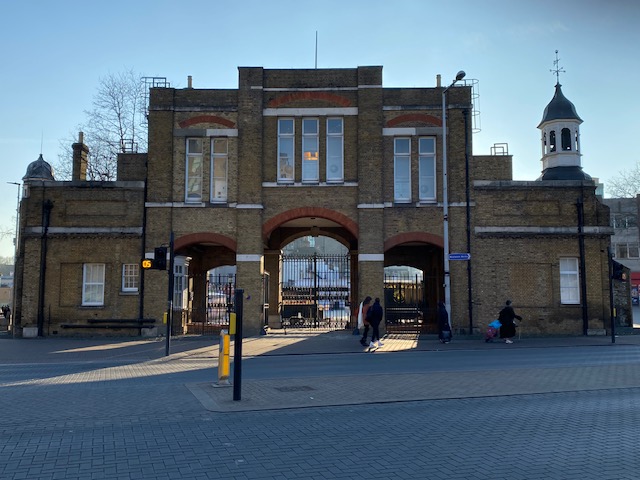
Final bus stop is possibly the most interesting place on this route. First to see is The Royal Gatehouse, being the main gatehouse of the Royal Arsenal in Woolwich. It was built in 1828, enlarged several times and is now a Grade II-listed building. The construction of a new gate for the Royal Arsenal was ordered in 1828 by the newly appointed Master-General of the Ordnance, the first Viscount Beresford.
Over the road is the Guard House, which has a bronze statue of Nike in front. The House was also commissioned by Viscount Beresford. Until 1844, security at Royal Arsenal was provided by the Royal Artillery. Guard duties were then shared with the Metropolitan Police who took full responsibility in 1861. These days it’s a pub/restaurant and is a grade II listed building.
The statue of Nike was a gift from the people of Ancient Olympia to the people of London to commemorate the hosting of the XXXth Olympiad in London 2012. This tradition of a gift to the host city has taken place after every Olympics since 1996. It was designed by Pavlos Angelos Kougioumtzis who was clear about where he wanted the sculpture placed.
“Here in (London Borough of) Greenwich, Nike gets an additional meaning. She becomes, thanks to the Greenwich Meridian, the only sculpture in the world to span the two hemispheres. One half on the western, the other on the eastern part”.


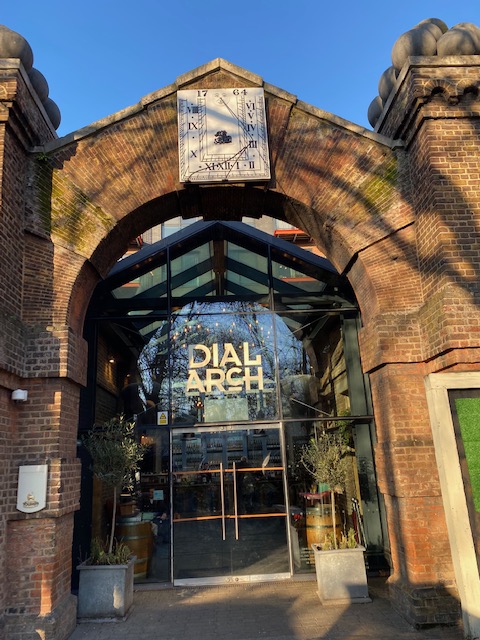
In the same area is Dial Square. In 1764 a sundial was erected over the main entrance to the brick warehouse and it is this building, now called Dial Square, which survives. Dial Arch is fronted by two large pillars, each supporting a pyramid of cannonballs, and a magnificent sundial, hence the name of the pub that is now situated there. Arsenal football club was founded just yards away.
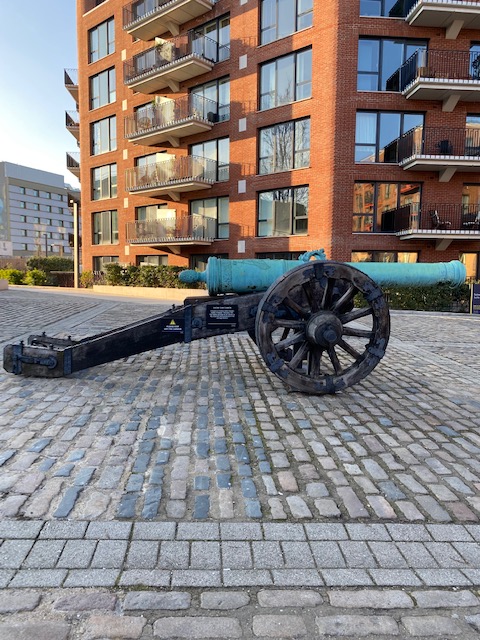
Yet another magnificent building here is the Royal Brass Foundry which dates back to 1717 when it was found that there were low stocks of artillery. The new Royal Brass Foundry also originally held a vertical cannon boring machine used to finish the bore of cannon, which at the time were cast with a core. It is thought that the building’s prominent tower or cupola housed the machine.

As if all this wasn’t enough for the eye to behold, round the corner is Equitable House. Woolwich Equitable Building Society was founded in 1847 and this was their HQ after moving from nearby Powis Street. It is a commanding and monumental building of solid neo-classicism, built to inspire the confidence of its customers and also expressed modernity with elegant Deco detailing throughout.

And so to the end of route 51 and surely the one that was worth waiting until the very end to get the best of the journey.
Available toilets that are free to the public on this route:
- Orpington station
- McDonald’s Orpington High Street
- McDonald’s Broomwood Road
 london routemistress