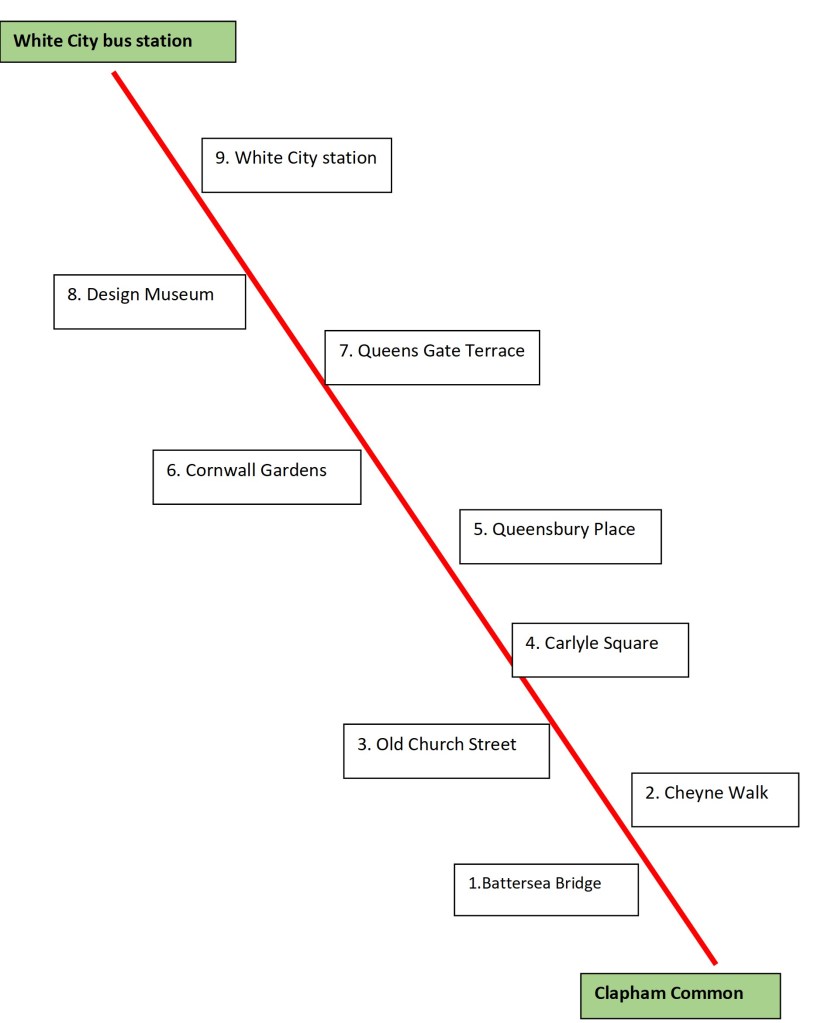
Clapham Common to White City bus station
Highlights:
- Brown Dog statue
- Albert Bridge
- Cine Lumiere
- St Stephen’s Church
1. Battersea Bridge
There’s quite a lot to see at this stop, starting with Ransome’s Dock. It’s the only dock that is the same size and shape as in Victorian times. The site was taken over in the mid-1870s by Allen Ransome, of the famous Ipswich-based engineering company. He extended and rebuilt the adjoining creek to form the dock that now bears his name. It was wide and deep enough to allow craft to turn, as well as allowing two rows of vessels to pass, and to leave on the lowest of tides.


Very near the dock is Albert Bridge, which is one of the prettiest of the Thames bridges. It was designed and built in 1873, initially as a toll bridge which turned out to be both structurally unsound and commercially unsuccessful. By 1879, the tolls were lifted although the toll booths are still in place to this day. The bridge has remained open to vehicles throughout its existence, other than for brief spells during repairs and no buses are allowed on the bridge due to its weakness. It is one of only two Thames road bridges in central London never to have been replaced (the other is Tower Bridge).


Still at the same bus stop, it’s time to find the Brown Dog statue in Battersea Park. In 1903, allegations of inhumane experimentation on a brown dog at a London university caused an outrage. The incident inspired a groundswell of support for the British anti-vivisection movement which resulted in riots between the students and anti-vivisectionists. The students attacked the original statue and in 1909, the local council decided to remove it and it was thus hidden away to remove any controversy. It wasn’t until 1985 that this new Brown Dog statue was erected in Battersea Park and where it remains to this day.
In the same part of the park is the Old English Garden. Originally created in the 19th century, it had fallen into disrepair. The perfume company Jo Malone has funded the revival of this lovely and peaceful garden, with plenty of flora and fauna, an ornamental pond and a sundial.


2. Cheyne Walk
3. Old Church Street
4. Carlyle Square
These stops are all within walking distance of each other so it’s possible to see all or some of the places here . It’s pleasing to see another Cabmen’s Shelter (see the one at Warwick Avenue station on bus route 46) this time on Chelsea Embankment. The Cabmen’s Shelter Fund was established in 1875 by the philanthropist 7th Earl of Shaftesbury to run shelters for the drivers of hansom cabs (horse and carriages) and later hackney carriages. They weren’t allowed to be larger than a horse and cart and provided hot food and drinks for the drivers.
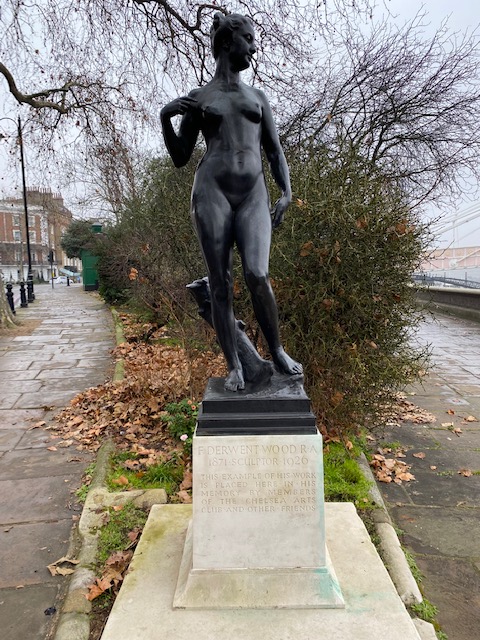
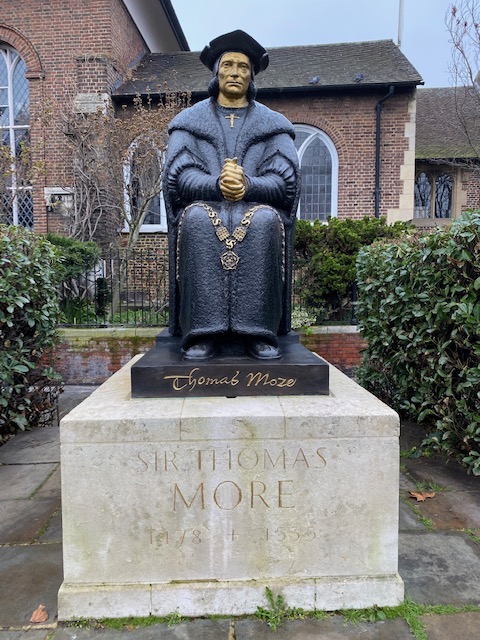
Walking along the Embankment towards Battersea Bridge, you come across a statue of a naked lady, by the sculptor F Derwent Wood. A little stroll along and you find yourself at the bronze statue of the writer and philosopher Thomas Carlyle. Carlyle lived close by for the last 47 years of his life and this statue has been listed as a Grade II building. Just further along is a statue of Sir Thomas More. His chain of office is on his lap and the crucifix is round his neck. His gaze is gently turned slightly to the left, his last journey down river to the Tower; seated as he is in what was his own garden facing the Thames awaiting the King’s barge.

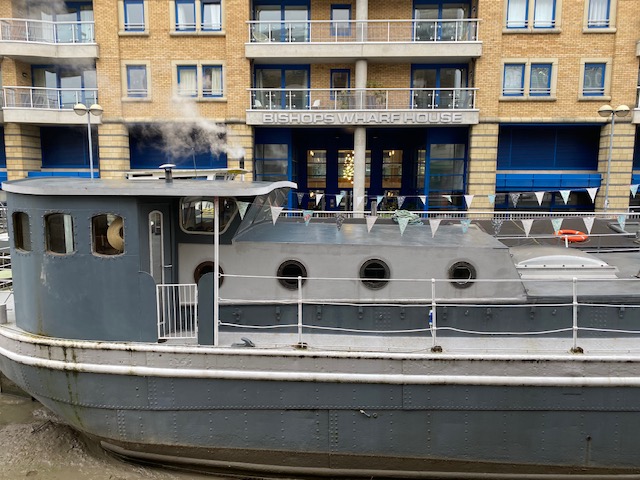
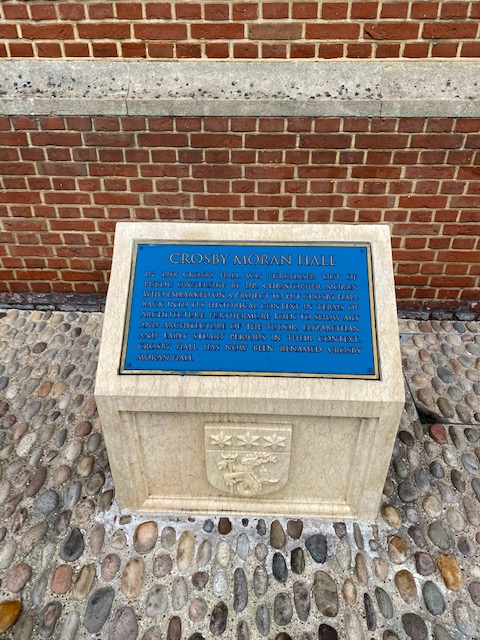
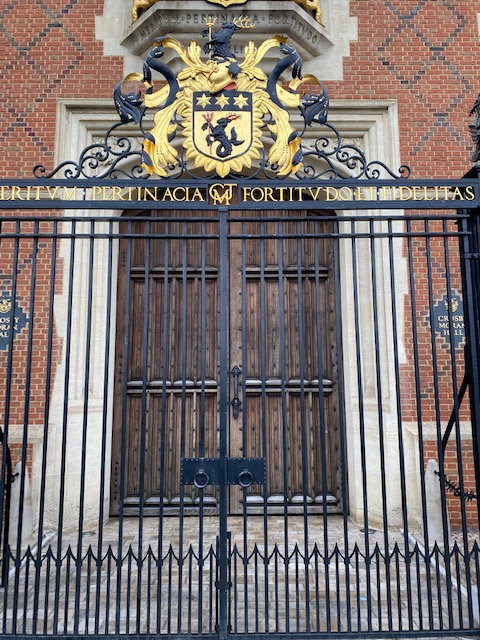
Almost at Battersea Bridge is the Crosby Moran Hall. The Hall was originally built in Bishopsgate and moved to this present site in Cheyne Walk in 1910. It is the only example of a medieval City merchant house surviving in London. The original building was built in 1466 in Bishopsgate by the wool merchant and alderman, Sir John Crosby. The building was completed in 1472 and on Sir John’s death in 1475, the hall was bequeathed to Lady Crosby, his widow, Anne. In 1483, the Duke of Gloucester, later King Richard III, bought it from Lady Crosby. and it was used as one of his London homes.

5. Queensbury Place
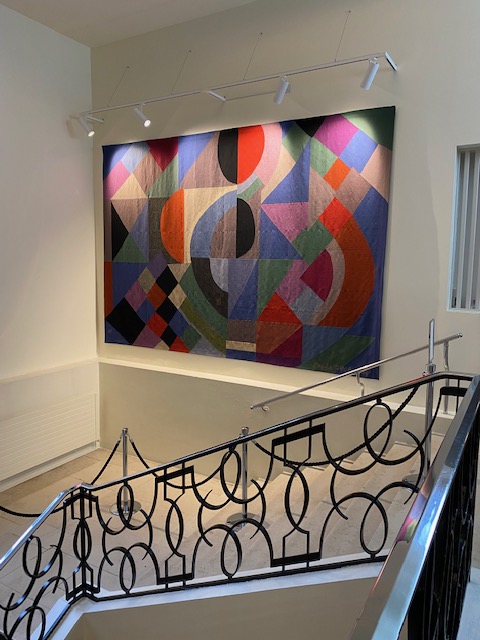
Round the corner from this stop is the Bibliothèque Quentin Blake, a contemporary children’s library with most of the books being in French. It’s so called after its patron, the illustrator Quentin Blake, who donated a splendid mural decoration following its 2015 refurbishment. Just adjacent to the library is the Institut Francais and the gorgeous art deco Ciné Lumière. Inside, a sweeping staircase leads from the foyer area to the first floor, decorated by the famous Rodin statue L’Âge d’Airain, and a tapestry by Sonia Delaunay.


6. Cornwall Gardens
7. Queen’s Gate Terrace
Near Cornwall Gardens stop is St Stephens Church. This is the church where TS Eliot was a warden and there is a commemorative plaque on one of the walls dedicated to him. The funeral of his first wife took place at St Stephen’s and Eliot lived for a while in the presbytery of the church. The church was built in 1867, and has part gothic design, with some beautiful stained glass windows. There is a towering reredos in gilded wood behind the high altar, and galleries for choir and organ facing each other on high.


Not far and certainly within an easy walk from the church is Kynance Mews. The entrances to the mews pass through three arches, each Grade II listed and were built in 1860. Until 1924, it was known as Cornwall Mews, having been built as stabling for the nearby Cornwall Gardens. These latter were so named because construction started in the year of the 21st birthday of the Prince of Wales, who also had the title of the Duke of Cornwall (the future King Edward VII). The mews changed its name from Cornwall to Kynance Mews c1924 retaining the Cornish connection with Kynance Cove on the Lizard, in Cornwall.
With its picturesque arches, cobbled street and immaculate condition, it’s obvious why it has been used as a location for films such as Star! (featuring Julie Andrews), The Big Sleep (Robert Mitchum) and Damage (Juliette Binoche).


Up some stairs within the mews is Christ Church, Kensington, with a pretty little garden. When it was consecrated in 1851, Christ Church was surrounded on three sides by fields and market gardens. Within 30 years, these were filled by the rapidly expanding Victorian metropolis and its equally ambitious and fascinating population, including princes and prime ministers. During WW2 the spire was taken down in 1941 and lay in the church garden until after the war. More recently, it was thought the church might have to close but the locals have rallied and have contributed to the repairs so that it’s still a thriving community to this day.
There are some lovely streets around here, such as Launceston Place, which are worth exploring.


8. Design Museum
Leighton House and Sambourne House are two properties that combine living and studio space, and remain largely unchanged today. They are legacies left by two Victorian gentlemen – Frederic Lord Leighton (1830-1896) and Edward Linley Sambourne (1844 -1910).
Leighton was considered the most prominent artist of his day and Sambourne was Chief Cartoonist at the satirical magazine Punch. Their similar tastes were reflected in the furnishing of their homes, both filled with sculpture, blue and white ceramics and glassware.
Both these houses have an entry fee so most of the interiors aren’t included here (as everything mentioned in these blogs are free of charge) but it’s definitely worth spending a little to explore the houses and see how the Victorian celebrities lived.


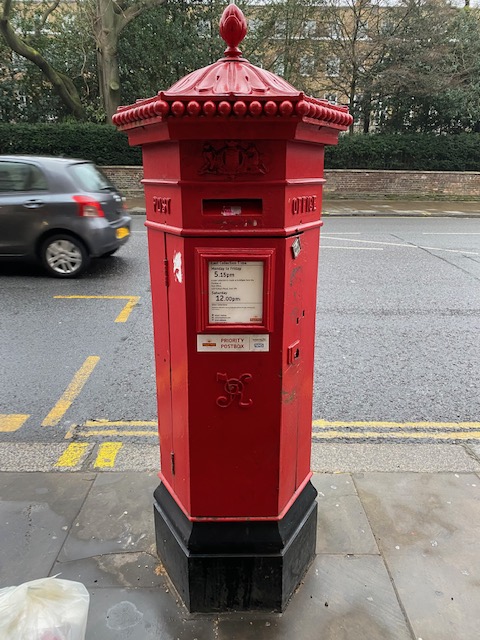
After visiting the house and on the way to the bus stop is Earl’s Terrace, another magnificent street with houses on one side only, all of which are grade II listed. And nearby is a hexagonal Victorian post box. The exact date when it was placed here isn’t known but it was during the reign of Queen Victoria, as the cypher VR is plainly visible on the front.

At Warwick Gardens is a monument to Queen Victoria. There are not many memorials raised to the queen to remember her after her death. This is because there were plans for a national memorial (at Buckingham Palace) so local memorials were not encouraged. However, this one evidently sneaked through and was unveiled by Princess Louise in 1904 in Kensington High Street, and was moved to the current location in 1934. Next to the monument is a Victorian water trough.


9. White City bus station
Final stop on the number 49 takes us to the Upside Down House™, the UK’s first inverted experience. As there is also an entrance fee to go inside, a photo of the outside only is placed here but it would be a fun day out to take a look inside.
This bus route has many places of interest to see, a lot of them are in clusters around Battersea Bridge and Cheyne Walk.
Toilets that are available and free to the public:
- Clapham Junction station
- Ciné Lumière
- Leighton House
 london routemistress
2 responses to “Bus route 49”
This is a fun day on a route at risk from extinction by the mayor of London. It was recently reprieved but the route may be pruned .
LikeLike
Thanks Jill. Yes it was a fun day – there were so many places to see and thanks to you, I saw some I hadn’t previously identified. Let’s hope the route doesn’t disappear …
LikeLike