
Paddington station to Smithfields Barts Hospital
Highlights:
- Man in clock at Paddington
- Beatles’ crosswalk
- St Pancras Old Church
- Holborn Viaduct
1. Paddington Station
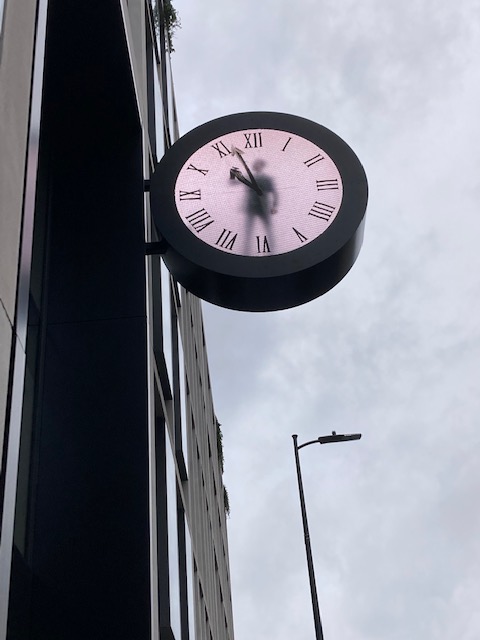
Before getting on the number 46, find your way to Eastbourne Terrace and opposite the entrance to the Elizabeth Line. Outside number 50, look upwards and you’ll see a man in a clock. Designed by Maarten Bass, a Dutch artist, the man in the clock is rubbing the hands and numbers off the face of the clock and replacing them in a twelve-hour looped performance, with the hands being replaced and redrawn every minute.

2. Bishops Bridge/Paddington station
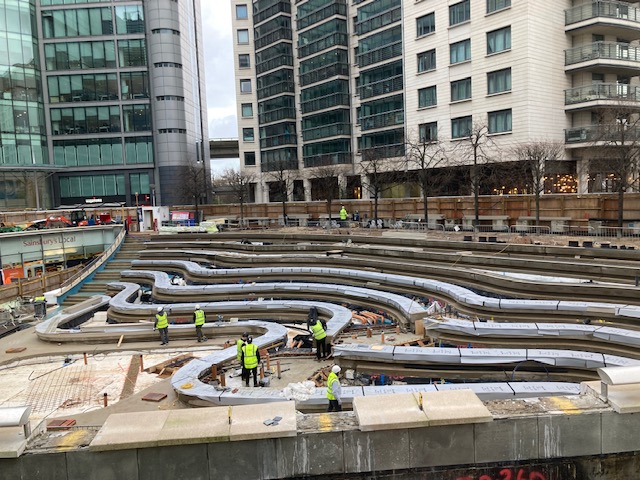
Either hop on the 46 for one stop or walk round to Sheldon Square and see the amphitheatre that’s in the process of being redesigned to better suit and serve the local community. The anticipated completion date is some time in 2023. Walk round the corner from the amphitheatre and you’ll find the curved Living Wall.
This site, located between two tall buildings, is exposed to windy conditions and partial sun throughout the year. The plants in the Living wall were particularly chosen to be hardy and offer year round cover but also to give both upright and training forms.
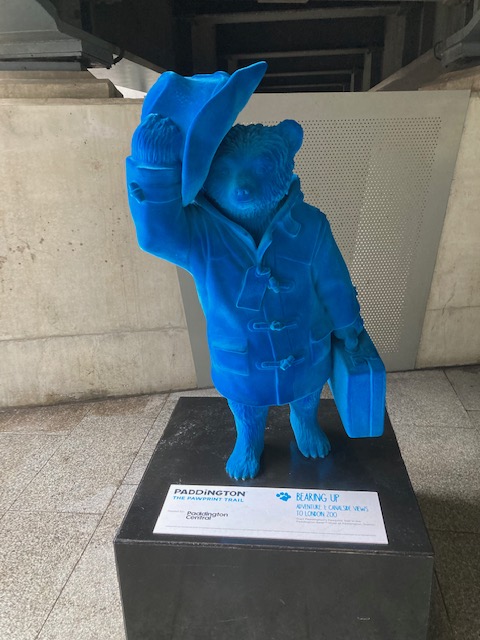
Next to the wall is a statue of Paddington bear in blue fur marking the beginning of the Paw Print Trail.

3. Blomfield Road and 4. Warwick Avenue
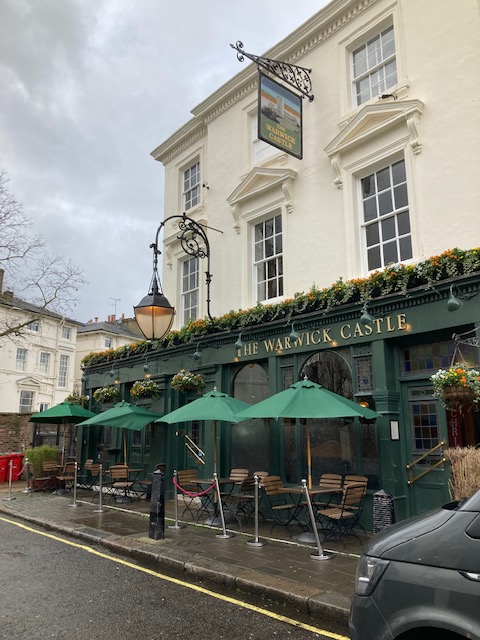
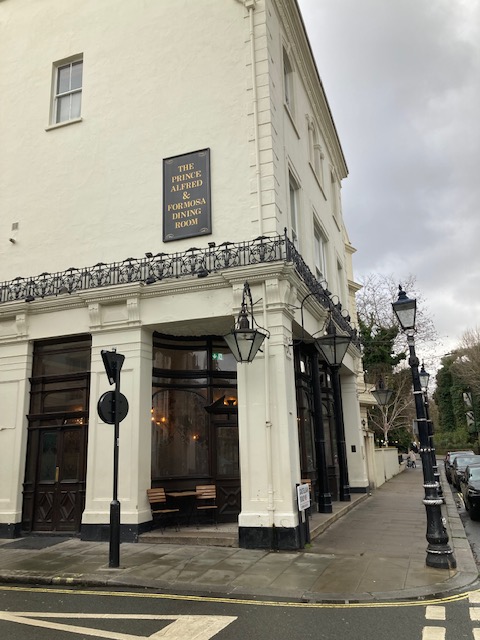
Alight from the 46 here and walk towards Warwick Avenue station. On the way, you’ll find the charming Warwick Castle pub in a side street. There has been a pub at this spot since 1867 and has had some alterations which have been faithful to the original décor. Head back to the station and you’ll come across a Cabmen’s Shelter, one of only a handful left in London. The shelters are green-painted roadside sheds established in 1875 by Sir George Armstrong to provide Hackney carriage drivers with a refuge where they could get a hot meal and a cup of tea, but strictly no alcohol. Round the corner from the shelter is the Prince Alfred pub, a grade II* listed building. It was built in 1856 and has some of the original features still inside. The two cast-iron lamp posts at the front of the pub in Formosa Street, have been awarded Grade II listed status.


5. Grove End Road
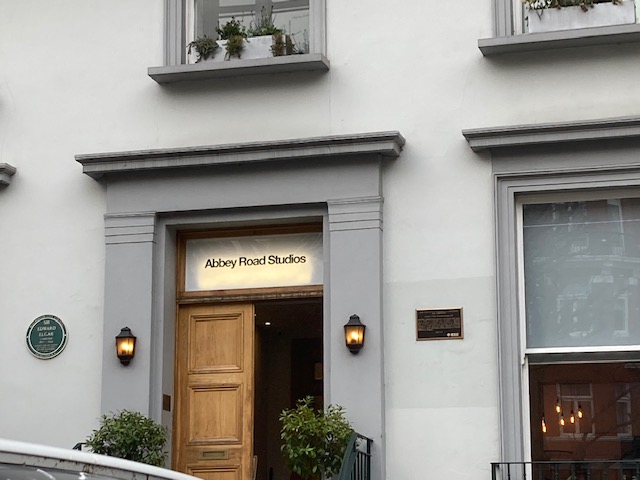
If you love the Beatles, then this is a must stop. The Abbey Road zebra crossing is a famous landmark in St John’s Wood as being the crossing as depicted on The Beatles Abbey Road album cover. Each of The Beatles is crossing Abbey Road, one behind the other. It’s not possible to go inside the Abbey Studios building but the shop next door holds many delights and memorabilia for the discerning fan.



6. Hampstead station/Hampstead High Street and
7. Pilgrim’s Lane
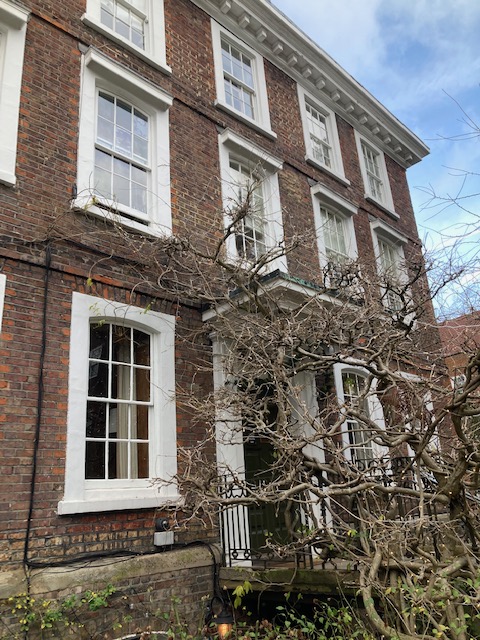
Alight at Hampstead station and it’s possible to walk between here and Pilgrim’s Lane. Burgh House was built in 1704 during the reign of Queen Anne. At the time of construction the Hampstead Wells Spa was flourishing. In 1720 the Spa’s physician, Dr. William Gibbons, moved to Burgh House, which he enlarged. He added the present wrought-iron gate which carries his initials. It has had many owners and has been in a state of disrepair over the years but today it’s been lovingly restored and refurbished into a house and museum, now open to the public.


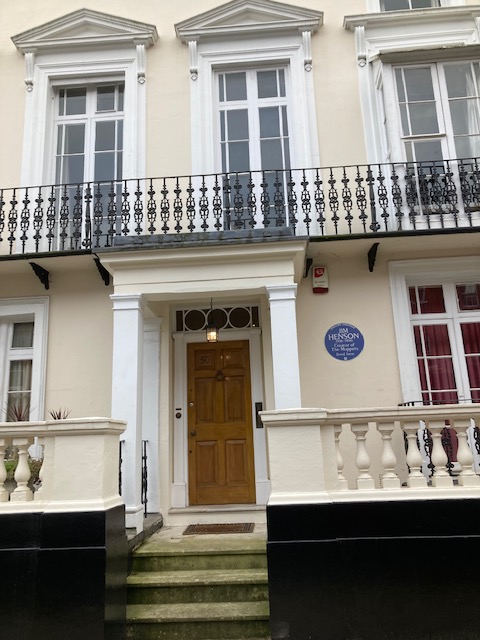
Back towards the centre of Hampstead is Downshire Hill where at number 50, Jim Henson, the inventor of the Muppets, lived from 1979 until his death in 1990. He bought the house after The Muppet Show was commissioned for British television. Along the same road is Hopkins House, a high-tech property so named because it was designed in 1976 by husband and wife Michael and Patty Hopkins. As they still live there, it’s not possible to go inside but even from the outside, you can see that it was built ahead of its time. In nearby Willow Road is a blue plaque at number 50 which states that Milein Cosman, the German artist and her partner Hans Keller, Austrian musician lived here between 1955 and 1967.


8. St Dominic’s Priory
St Dominic’s Priory is one of the largest catholic churches in London and is grade II* listed. If you want to go inside and to see the Rosary
Shrine, it’s worth finding out the times it’s open. Usually this is 3pm to 7pm weekdays and different times at the weekend.

St Dominic’s Priory and Rosary Shrine
9. Chenies Place
The 46 stops outside St Pancras Old Church and churchyard. Walk around the churchyard and you’ll see tombs and mausoleums of some famous people, including John Soane, the celebrated architect and Mary Wollstonecraft, one of the founding feminist philosophers. There is also the rather grand Burdett-Coutts memorial sundial erected in 1877–79, at the behest of Baroness Burdett-Coutts. The former churchyard was closed to burials in 1850, but some graves were disturbed due to the construction of St Pancras railway station. The obelisk acts as a memorial to people buried near the church whose graves were disturbed.
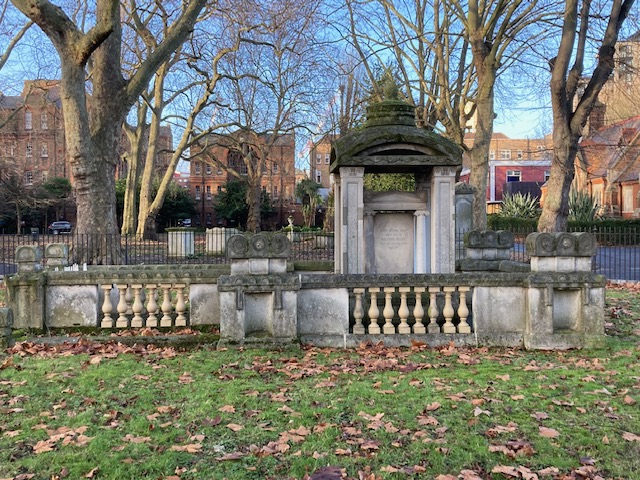

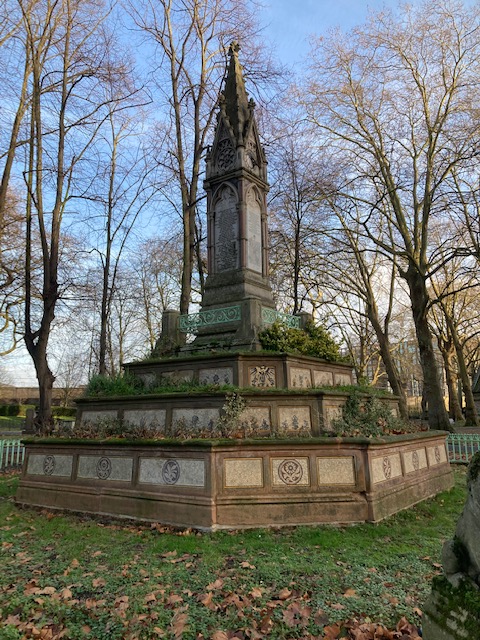
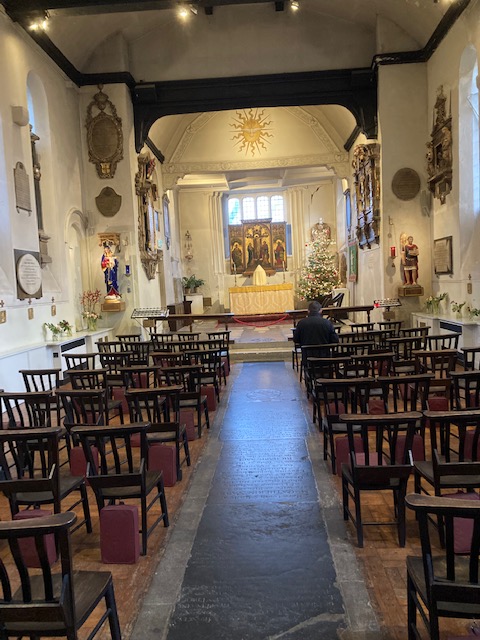
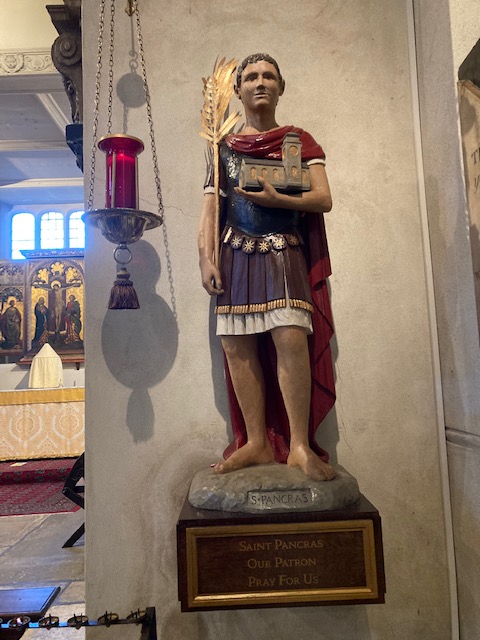
The Old Church is dedicated to the Roman martyr Saint Pancras, and is believed to be one of the oldest sites of Christian worship in England. For many years, the church was in an isolated spot, being far from the boundaries of London and as early as 1297, it was reported to be in need of repair, with the roof in a poor state. The old church was a favourite of Elizabeth I but in the civil war it was turned over to being lodgings for soldiers. In 1822, a New Church was built not far away causing the old church to fall into disuse. However with the advent of industrialisation, the old church was needed again and was restored in 1848.

10. King’s Cross station
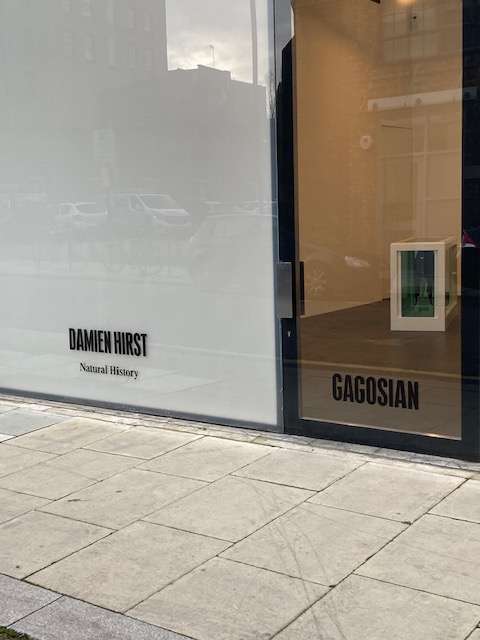
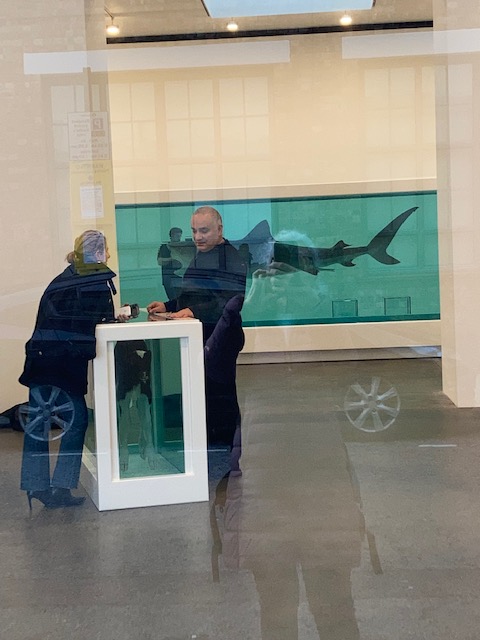
The Gagosian Art Gallery is in Britannia Street and has works by contemporary artists (Damien Hirst being the current artist). It’s one of a handful of blue-chip galleries that showcase the work of artists whose work is already high (and often increasing) in value. Gagosian has become an art empire with galleries in cities around the world.
Opposite the gallery is Derby Lodge, where flats 1-36, formerly known as Derby Buildings and built around 1865, are grade II listed.

11. Clerkenwell Road
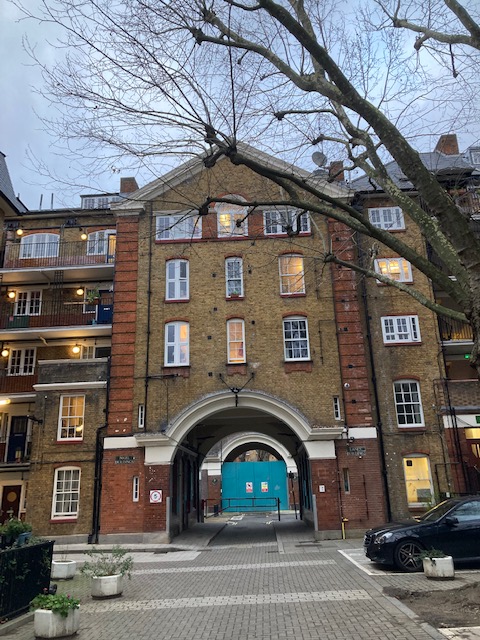
Towards the end of the 46 route is Bourne Estate. It’s an Edwardian housing estate consisting of a number of residential blocks which enclose several quiet shady courtyards containing mature trees. The design of the buildings incorporates classical features as well as arts and crafts details such as gabled walls, and casement windows on the inner courtyards and decorative mouldings to the large arches on the access ways.


12. Holborn Circus
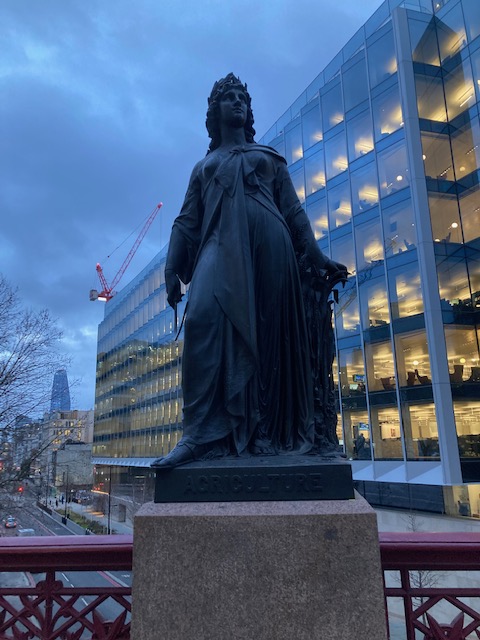
Final stop on this route is to see Holborn Viaduct. This road bridge was built between 1863 and 1869, to improve access to the city from the west end and was opened by Queen Victoria in November 1869. There are parapets adorned with figurative statues to represent commerce and agriculture on the south side and science and fine art on the north side. It’s a wonderful feat of engineering and is worth taking a look from both street level and on the bridge itself.


This route 46 is extremely interesting and despite the fact that not all places are open at all times, it’s worth the trip to see just some of the highlights.
Toilets that are available to the public and free of charge:
- Paddington station
- Burgh House
- Royal Free Hospital
- Kings Cross station
 london routemistress