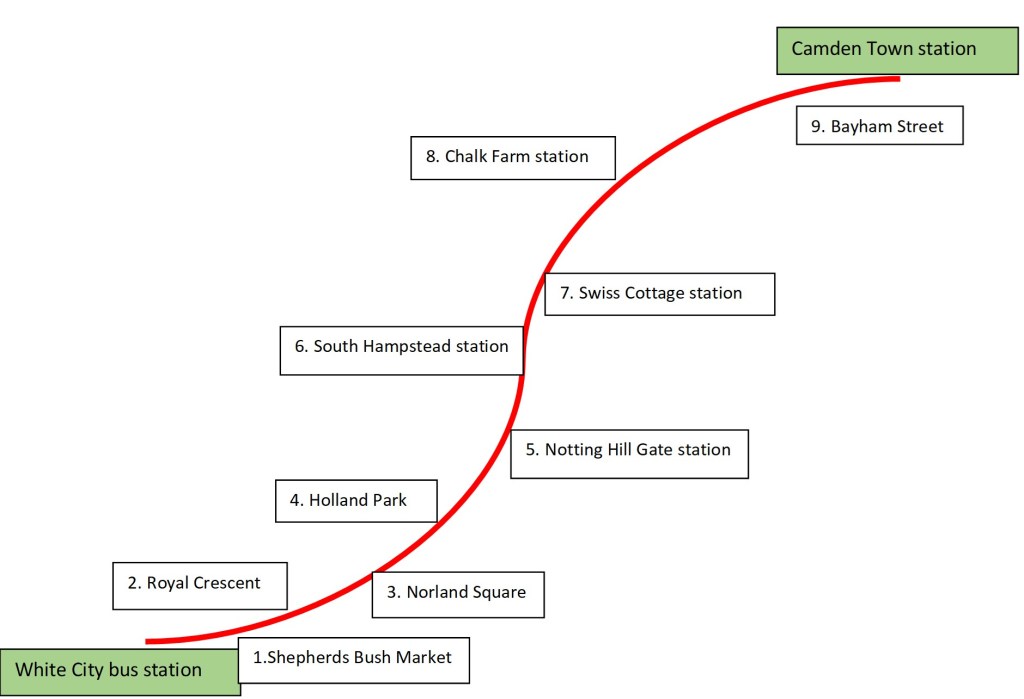
White City bus station to Camden Town station
Highlights:
- Royal Crescent
- Tortoises with Triangle & Time sculpture
- Amy Winehouse statue at Camden Market
Today was a first – I actually took someone with me for the start of the journey. My partner Isaac decided to see what I do on my bus days – it did mean I had to be more organised than usual.
1. Shepherd’s Bush Market
We went by tube to Shepherd’s Bush Market and had a quick look round, popping in to see a friend who has a stall there. Next door to the market is Bush Theatre, which is housed in the old library and was built at the end of the 19th century. The theatre is considered a seedbed for new plays.


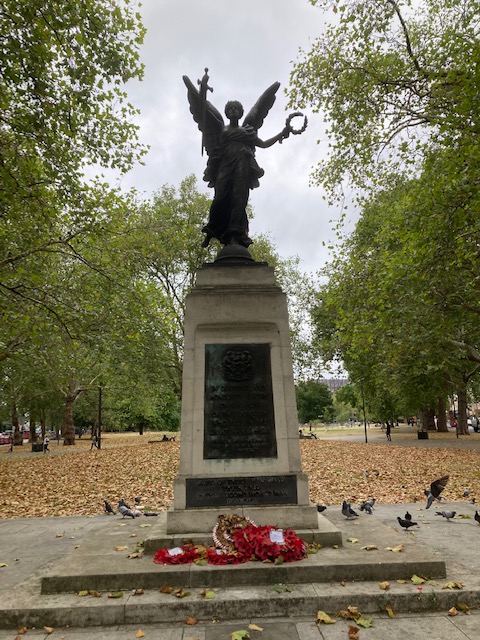
We walked round the corner to Shepherd’s Bush Green and came across a memorial to local men and women who died in world war I or II. We then started our bus journey on the number 31.
2. Royal Crescent
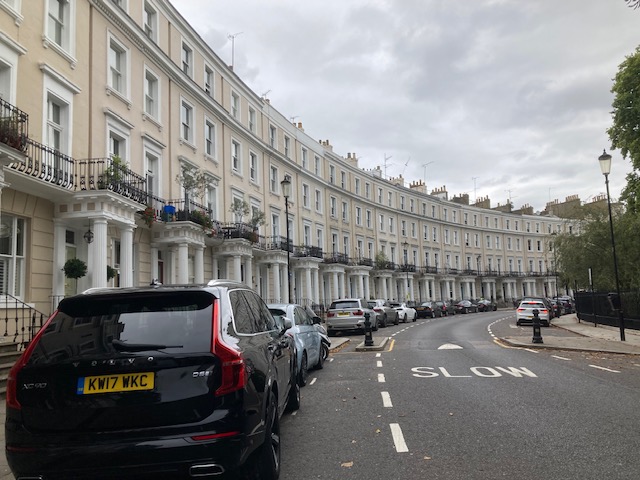
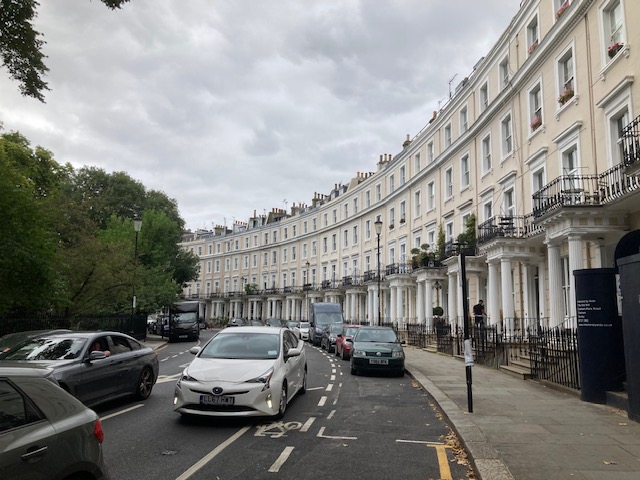
We alighted at Royal Crescent, both the name of the stop and the street. The crescent is reminiscent of the one in Bath and is a grade II listed street. There are two crescents around a central garden which is only open to residents.

3. Norland Square
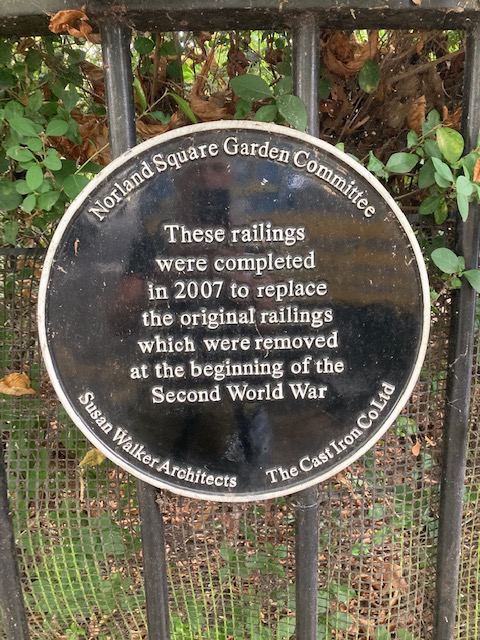
By this time, I was back to being on my own. I walked round to Norland Square and en route went past St Mary’s Ukrainian School, a Saturday community school, catering for all age groups. It’s on the premises of the Ukrainian Cultural Centre. Round the corner is Norland Square, which is part of the Norland Estate, built in the 1840s. There is a pretty garden in the centre of the square which is open to the public. In Norland Place, I found Masterpiece Art, an art gallery and art advisory firm. Sadly, it being Monday, the gallery was closed – another one for another day.


4. Holland Park station
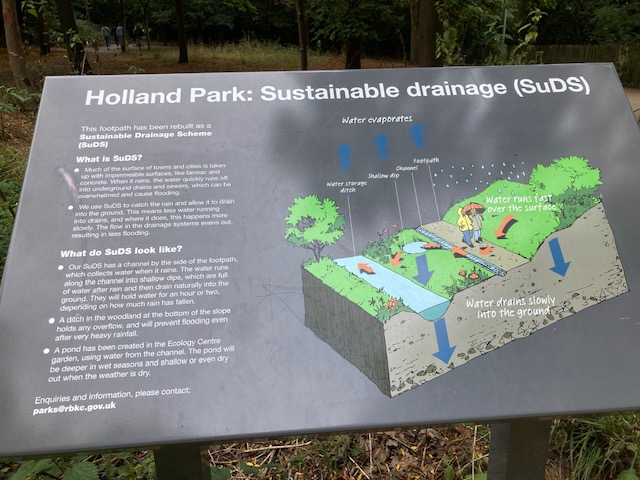
As my next place to visit wasn’t too far, I walked via Holland Park Mews, consisting of 67 houses that had originally been stables, on a cobbled road. Further along the road is Holland Park and I went to see a sculpture called Tortoises with Triangle and Time, commissioned to mark the arrival of the new millennium. Also in Holland Park is a footpath that has been rebuilt as a Sustainable Drainage Scheme (SuDS) in order to catch the rain and allows it to drain into the ground.


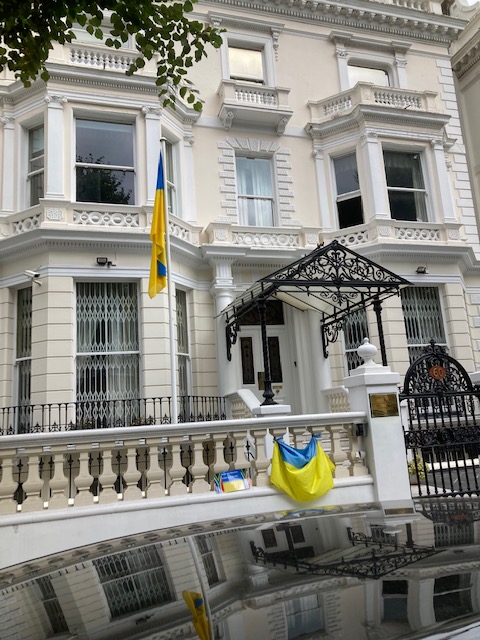
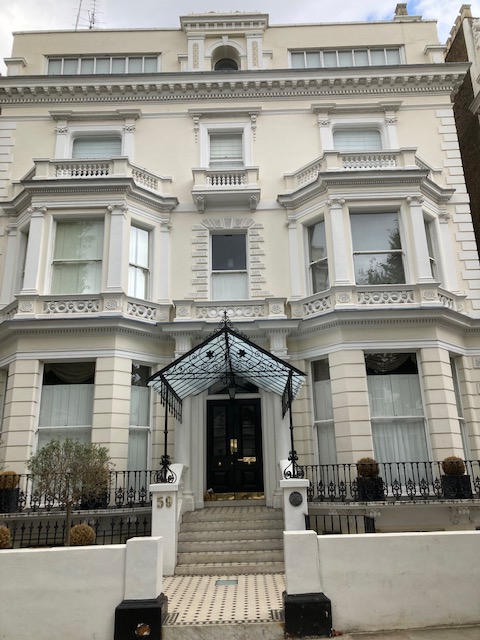
On my way to the bus stop, I passed 60 Holland Park, the Ukrainian Embassy, with next door (59) being a grade II listed building. The houses here are all magnificent.
5. Notting Hill station
I took the bus to Notting Hill Gate station and found a metal sculpture of a Carnival Elephant outside Newcombe House. I’ve yet to discover why it is there … I then went to Bedford Gardens, a Georgian terrace with some lovely houses. Number 77 has been home and studio to several artists, including John Minton.


6. South Hampstead station
Back on the number 31 to South Hampstead station and walked round to Alexandra and Ainsworth Estate, designed in the brutalist style in the 1960s and was the first post-war council estate to be awarded grade II listed status. Because of its architecture, it’s been used in numerous films and TV series.
7. Swiss Cottage station
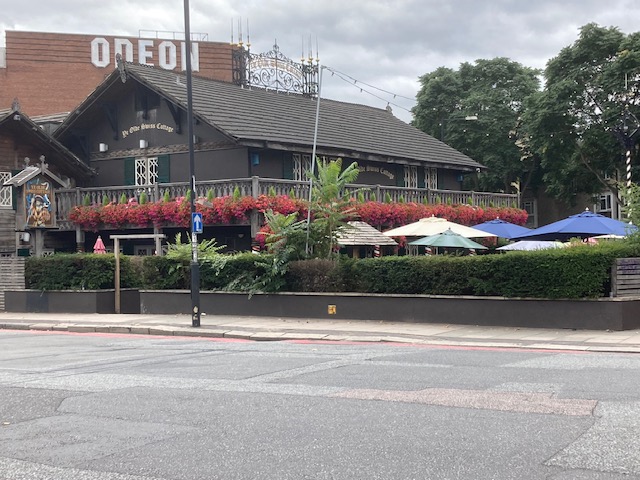
I hopped back on the bus to get out at Swiss Cottage station, near where had been the site of the Embassy Theatre, which sadly is no longer there. Round the corner is Swiss Cottage Library and outside it is an Open Space with a lovely water feature. I also took a look at the Swiss Cottage pub, originally built in the 1840s as a coaching inn on the outskirts of London, where it was surrounded by fields. Not any longer!


8. Chalk Farm station
Almost at the end of the journey, I alighted at Chalk Farm station to go and see the memorial statue of Amy Winehouse just inside Camden Market. There were a number of people having their photo taken alongside the statue. As I was there, I had a brief tour of the market but it was very busy and crowded, so I didn’t stay too long.


9. Bayham Street
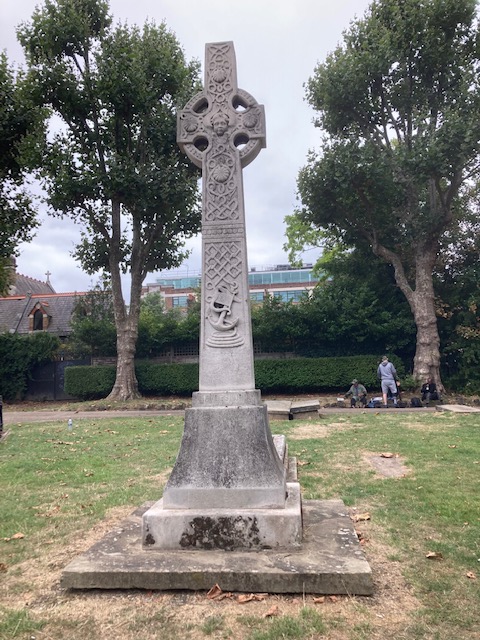
Final stop on the number 31 was at Bayham Street. I walked round to St Martin’s Gardens which was actually a bit of an unexpected gem. Originally built as a burial ground, there are still many gravestones scattered around the park. Notable landmark is a memorial to Charles Dibdin, a late 17th/early 18th century composer and entertainer. Also in the gardens is a grassy mound which apparently contains bones from the original burials. The granite drinking fountain is grade II listed.


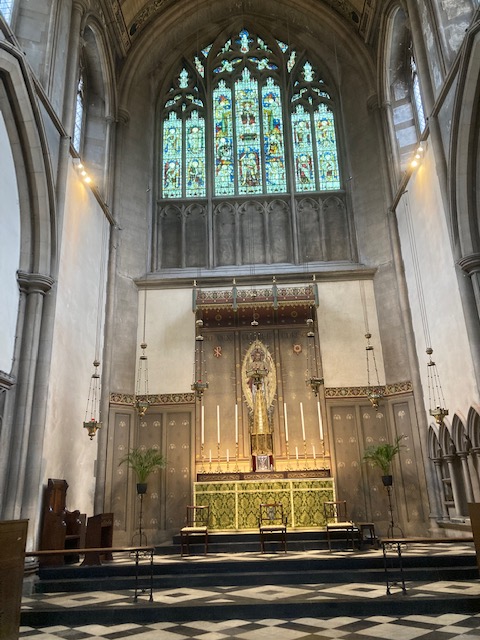
Thinking that was my final place to visit, I was pleased to find St Michael’s Church open so I popped in to take a look. It was built in the late 19th century in a gothic revival style. The Church has hosted a contemporary art installation behind the font by the Royal Academy’s Maciej Urbanek. The Work, titled ‘HS’, presents an abstract and subversive take on the classic image of the Holy Spirit descending as beams of light. Interesting to see and worth a visit.


A lot of the day was taken up with looking at streets and squares, with very little indoors. What I found surprisingly good were the Alexandra and Ainsworth Estate, and St Martin’s Gardens. It was rather humbling too, to come across the two Ukrainian buildings and it was a reminder of the situation there at the moment.
 london routemistress