
Wood Green to Trafalgar Square
Highlights:
- Railway Fields Nature Reserve
- Cecil Brewer Staircase in Heal’s
- Benin Bronzes in British Museum
- Soho Square
Monday 8th August 2022
1. Lordship Lane
I arrived at Wood Green on the Piccadilly Line and walked round the corner to Gladstone Avenue to find a granite cattle trough, dating back to the end of the 19th century. At that time, Wood Green was a route down which people took their livestock by foot so the trough must have been very welcome on their journey towards London.
2. I then picked up the 29 and went just 2 stops to Brampton Park Road. While researching this bus route, I came across a list of street furniture in Haringey and was keen to find some – I wasn’t disappointed. Around Arnold Bennett Way, I found parish markers and a cast iron finger post.


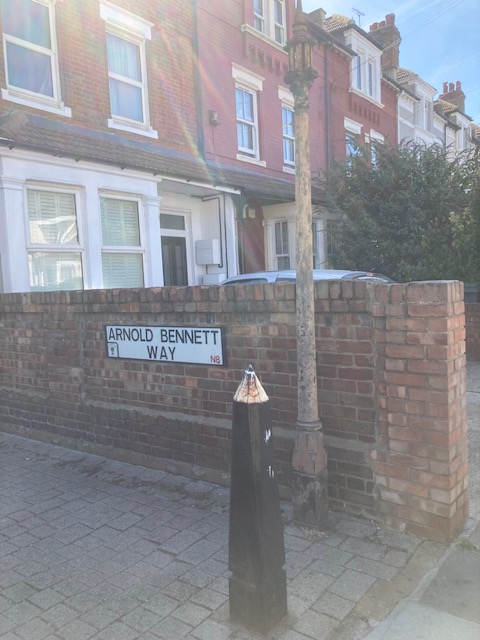
Whilst I was taking photos of these markers, I got talking to a local man called Dave who told me I must go to Duckett’s Common and he gave me a potted history.
3. Turnpike Lane
In April 1977, The National Front marched along Turnpike Lane, opposite the end of Duckett’s Common. Some anti-fascist protestors attacked the marchers, subjecting them to a barrage of smoke bombs, eggs and rotten fruit. Whilst walking to the common, I walked down Burghley Road to see the only local drop-in community centre for the under 5s. It’s in a beautiful house, dating back to 1697.

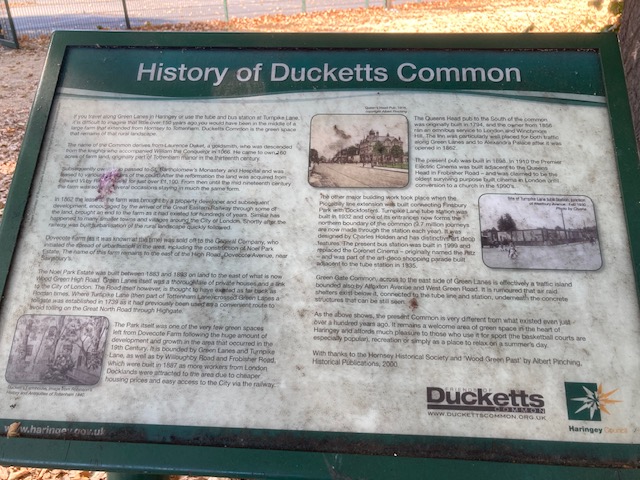
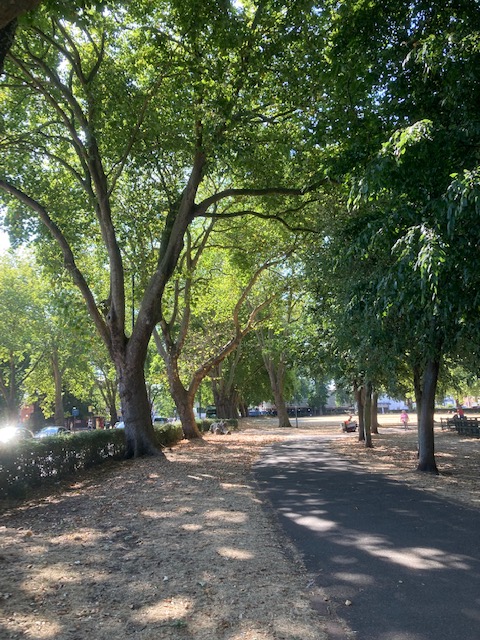

4. Harringey Green Lanes
It was definitely a day for spending outside so my next stop was at Harringay Green Lanes and to the Railway Fields Nature Reserve. A really lovely spot, with lots of shady trees and plenty of nature to observe. It’s even possible to see the remains of train tracks from the time this area was a siding.
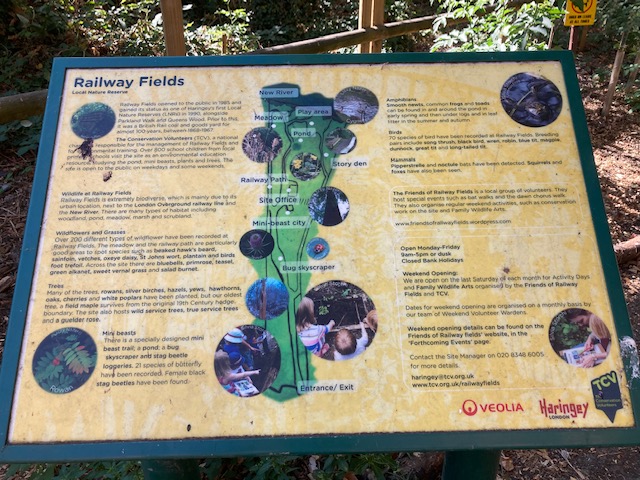


I wanted a better view of New River so I walked round to Umfreville Road and found a section of Haringey Passage. On researching this, I discovered that it dates back to the 1870s and in fact was built to cover the sewers underneath. Originally a mile long, not all of it remains.
5. Rowley Gardens
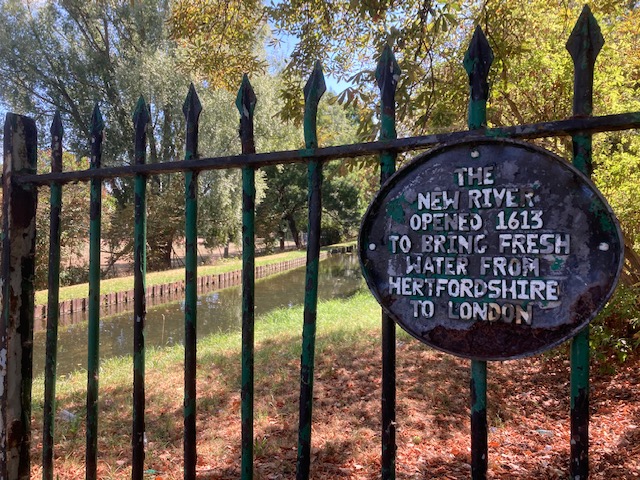
I then went back to the bus and got out at Rowley Gardens to make my way to Finsbury Park. It’s a pretty big park so I decided not to explore all of it. I did, however, find New River which I discovered isn’t New and isn’t a River! It was opened in 1613 to bring fresh water to London and is in fact an artificial waterway, starting at the River Lea, ending in Islington.


6. Sandall Road
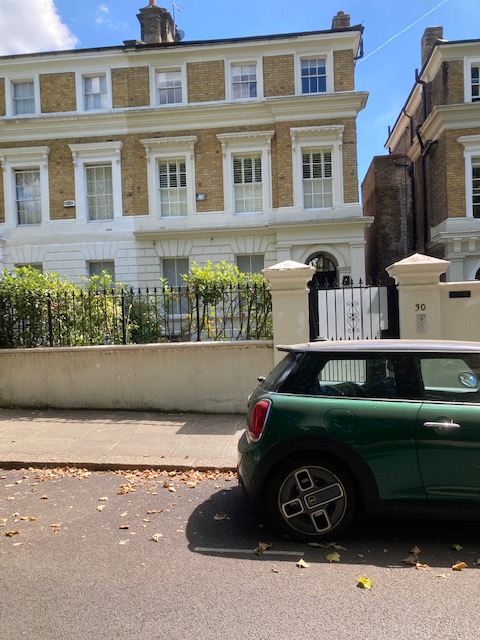
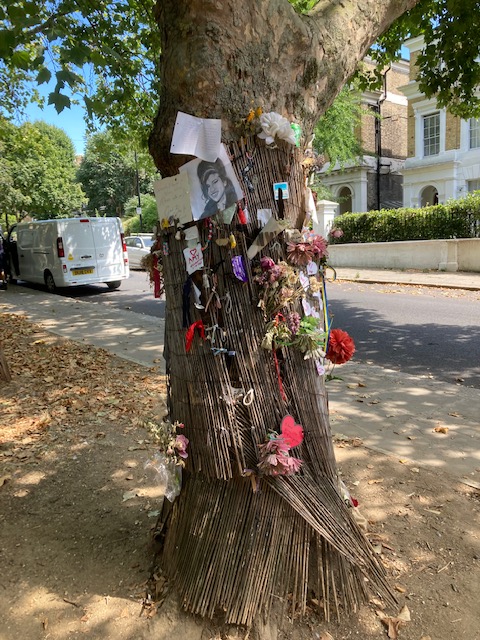
From the park, I went back on the 29 and got out at Sandall Road to go to Camden Square. The most famous resident is/was Amy Winehouse and I went to see the house she’d lived in at #30. Opposite the house is a tree which is used as a shrine to her and has gifts, letters and messages posted on it, left by fans. As I wandered back to the bus, I came across a plaque of George James Symons, an eminent meteorologist, in Murray St.

I had read about the Strand Union Workhouse in Cleveland St and took the bus to Capper St to find it. However, I was actually a few years too late as development started in 2019.
7. Goodge Street station
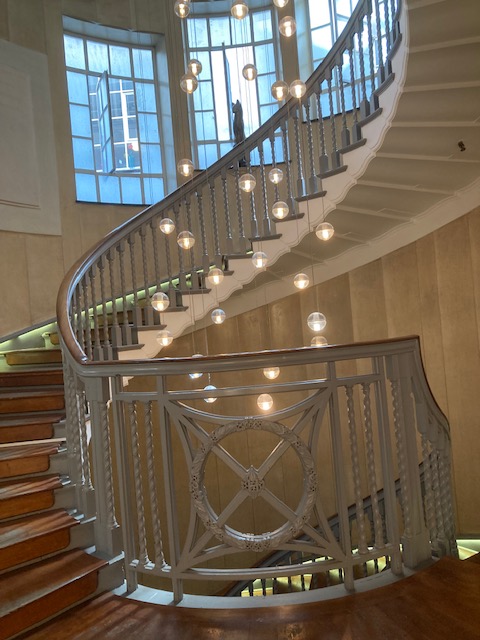
So I walked to Goodge St and saw an area where there were some stalls selling street food and also the Fitzrovia Memorial, which had been inspired by local life and people. Over the road was Heal’s and I popped in to have a look at the store – the Cecil Brewer staircase is definitely one to see. It was built in 1916 and is truly a work of art.


8. Stephen Street
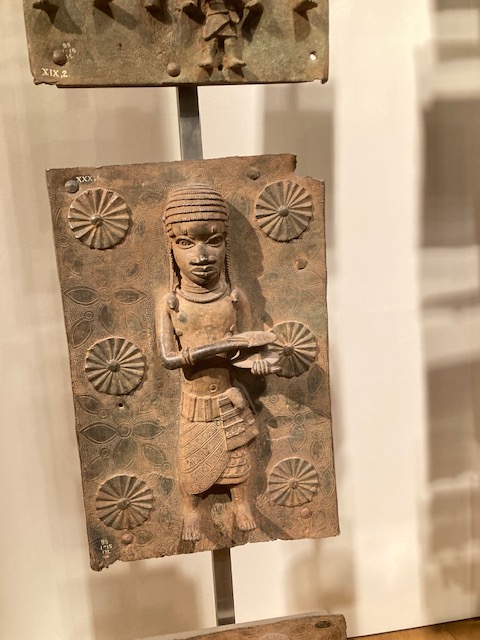
As it wasn’t too far away, I walked to the British Museum and to the George VII galleries. In particular I wanted to see the Benin bronzes which had been recently in the news. When visiting museums or galleries on these bus days, I don’t stay long so I aim to see one or two specific things and know that I can return another day. The bronzes alone are worth the visit and as they may be returned to Nigeria soon, it was good to see them now.



9. Cambridge Circus
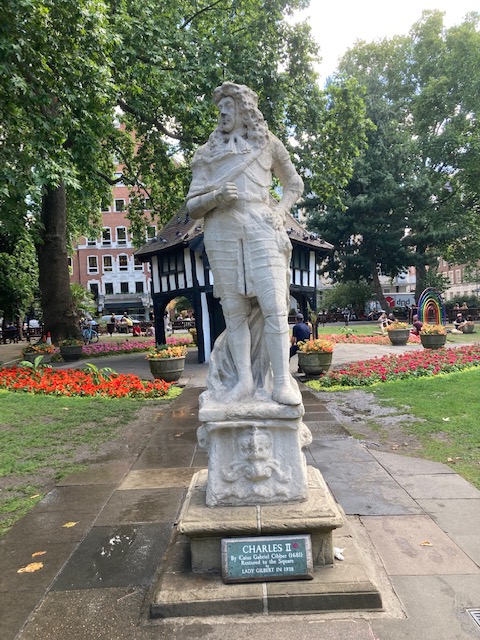
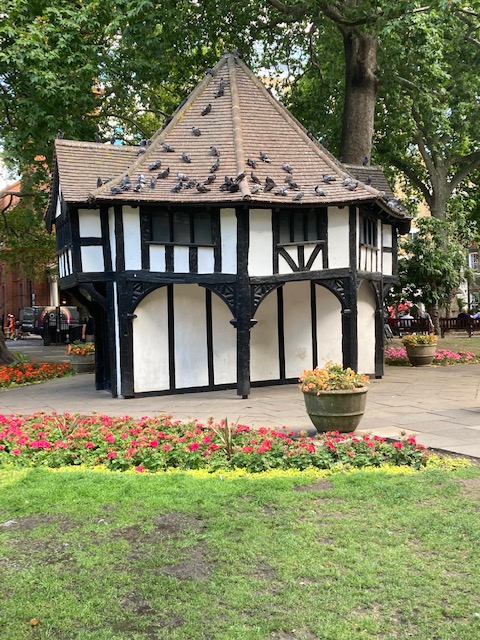
My final stop of the day was Soho Square, and being such a lovely day, I was able to walk round there from the museum. There is a statue of Charles II in the middle and in fact it had originally been known at King Square, as it was made during his reign. In the centre of the gardens is a listed mock “market cross” building, completed in 1926 to hide the above-ground features of a contemporary electricity substation; small, octagonal, with Tudorbethan timber framing.
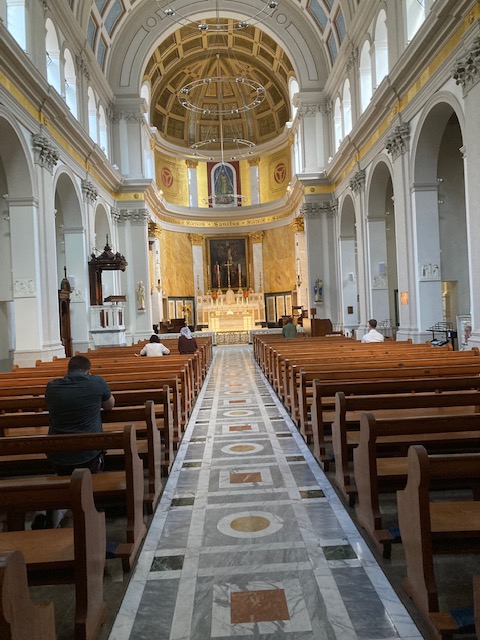
On my way to the bus stop I went into St Patrick’s Church, a catholic church since 1792. It’s the only church in England dedicated to the patron saint of Ireland. The area around the church was known at “the Rookeries” and used to be frequented by destitute immigrants, many of whom were Irish.

I went to Cambridge Circus to get the 29 to Trafalgar Square where the bus terminated.
I enjoyed this route very much, there was such a variety of places to see. One thing I learned was that it’s often good to speak to local residents in places that I’ve not been to – they know a lot of their area and seem keen to share their knowledge. This was true today when speaking to Dave in Wood Green and also some people I came across in Railway Fields.
 london routemistress