
St Mary of Eton Church to Waterloo station
Highlights:
- Herd of Hope
- Charnel House
- Bank of England Museum
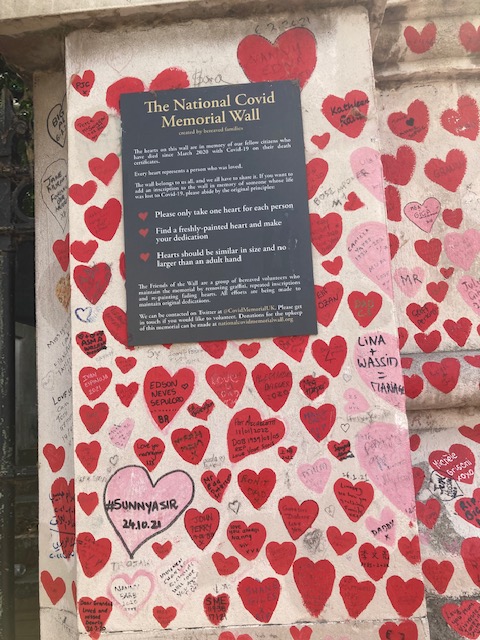
- National Covid Wall
1.St Mary of Eton Church
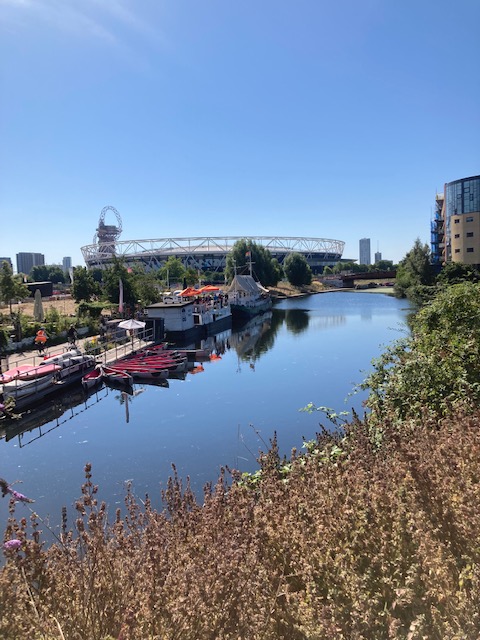
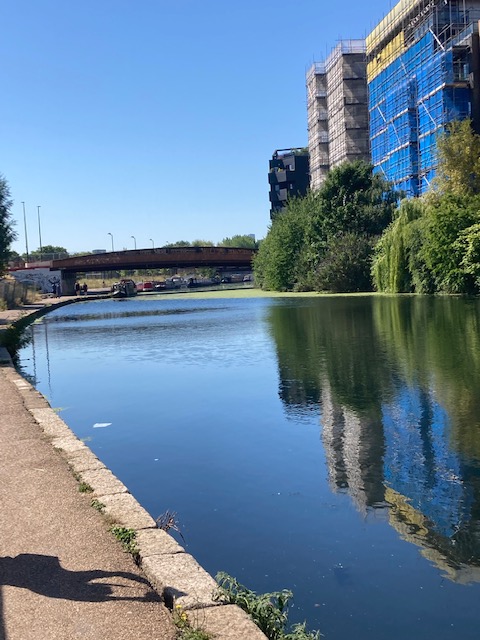
Back to travelling on a Monday – and it must have been the hottest day of the year. But I’m not deterred by weather – good or bad – so off I went to the start of the route at Hackney Wick. I had a short walk before getting to the bus stop and found the river Lea which looked very lovely in the sunshine. I had hoped to call into St Mary of Eton church which is the beginning of route 26 but there seemed to be no way in.

2. King Edwards Road
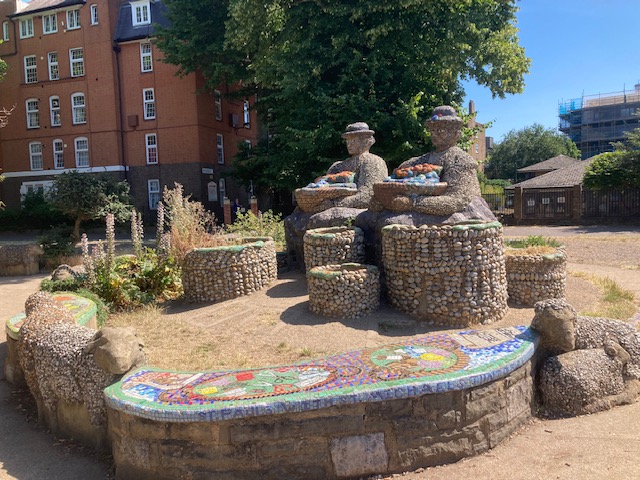
I got on the 26, alighted at King Edwards Road and came across Mare Street Market, a large space predominantly a restaurant but with small, hip shops inside. I then walked round to London Fields, passing some art graffiti on the way there. On entering the park, I found a stone and mosaic sculpture of two women but I couldn’t find anything about who made it or what it represents.


3. Shoreditch Church
From there I took the bus to Shoreditch Church where again I wasn’t able to enter inside. However I walked round the grounds and found a small memorial for civilians who had died in the Second World War. After this, I took a short walk round to Boundary Passage, the last relic of the Jago, (the slum that Arthur Morrison wrote about in his classic 1896 novel A Child of the Jago). The passage joins Shoreditch High St with Old Nichol St and has posts at one end, allegedly from Nelson’s cannons.


4. Primrose Street
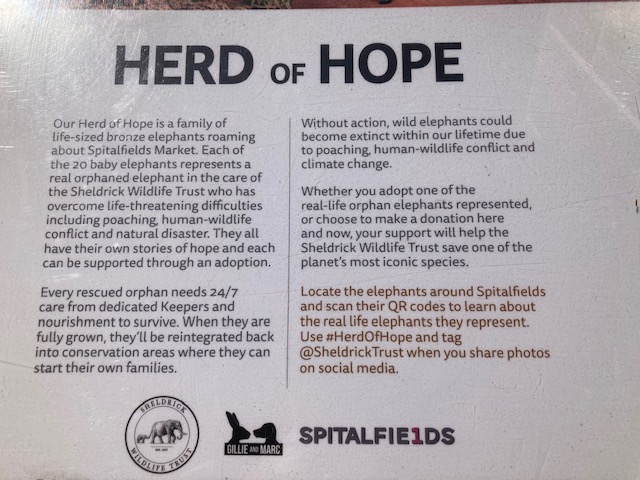
Back on the 26 and alighted at Primrose Street where I made my way to what’s called Broadgate Art Trail. I found a number of bronze statues of elephants, part of the Herd of Hope roaming around Spitalfields Market. Each represents a real orphaned elephant in the care of Sheldrick Wildlife Trust. I was so wrapped up in the elephants and my other reason for going to this area – Charnel House – that I forgot about the Art Trail so will explore it at a later date. I had no idea what to expect about Charnel House but was very pleasantly surprised. What you can see are the ruins of a medieval building used to store human remains, the corpses of unfortunate souls who passed away in large numbers, due to either famine or plague.



5. Liverpool Street station
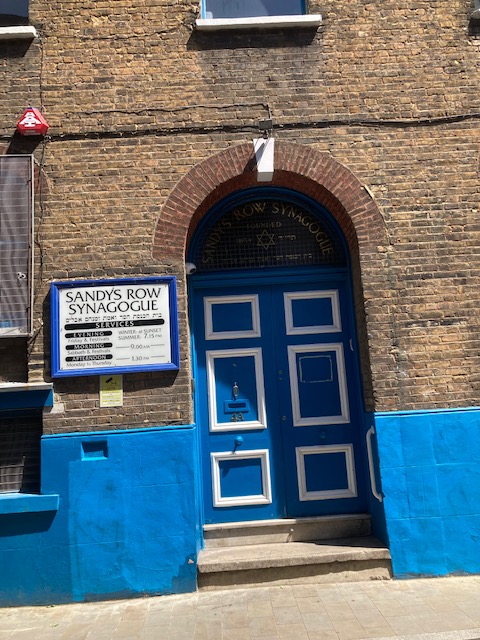
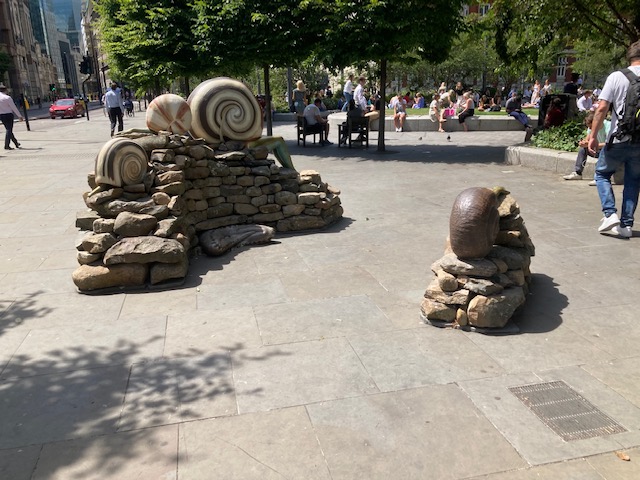
As it was only one bus stop, I decided to walk to my next place of interest which was Houndsditch. On the way there, I came across Sandys’ Row and went to see the synagogue which was closed but I would dearly love to go inside as it’s a grade II listed building which is steeped in history. I made my way to 119 Houndsditch – the site of the jewellery shop that was involved in the Sidney Street siege (see bus route 25). Also en route was the Gherkin which is even bigger close up. Wending my way round to Aldgate, I came to Aldgate Square and an interesting sculpture of anthropomorphic molluscs, called Earthling.


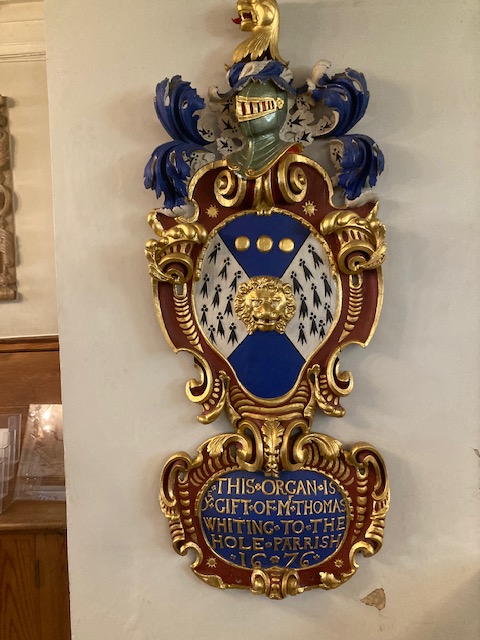
And so to St Botolph without Aldgate, a medieval church with reputedly the oldest church organ in the UK. It is the church where Daniel Defoe was married in 1683, and the parochial foundations may very well date from before 1066. It has been rebuilt and redecorated several times, the latest occasion after an unexpected fire in 1965.



6. Camomile Street
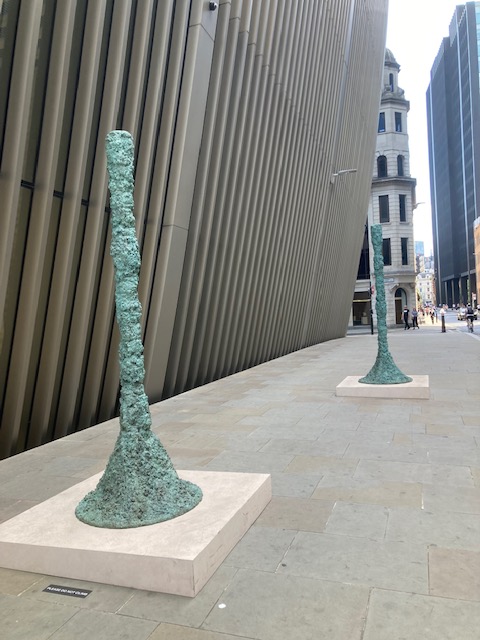
On my way to the next stop, I found a few things of interest. There is a London Wall trail and I came across two of the stations – number 5 is at Aldgate, the city gate and number 7 at Bevis Marks city wall. I found further sculptures as part of Sculptures in the City – one called Nests Continued by Victor Seaward outside 99 Bishopsgate and Untitled by Bosco Sodi at 70 St Mary Axe. I have since discovered that there are 20 so I’ll do my best to track them all down over the coming weeks/months.


7. Old Broad Street
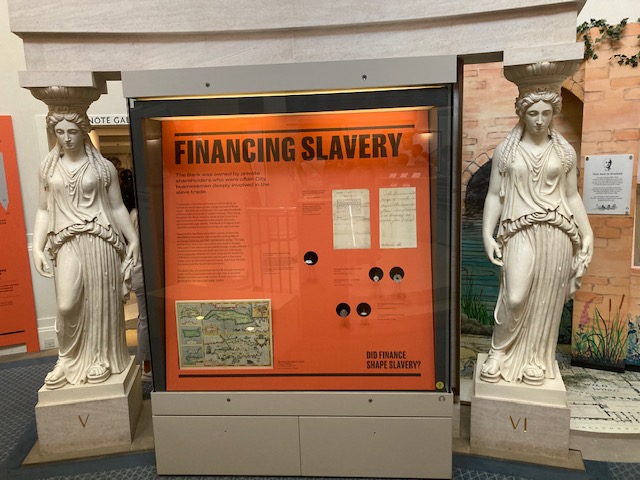
Almost at the end of the route, I took the bus to Old Broad St and walked round to the Bank of England Museum, one of a few that are open on a Monday. It’s small but perfectly formed! Lots of information about the history of the bank and our money, plus various artefacts from the past such as a Tally Stick … There is a temporary exhibition about Slavery and the Bank which makes difficult reading but is very informative.



8. Waterloo station
Final stop of the day was at the end of the route near Waterloo. It was the National Covid Memorial Wall and was a sad reminder of all the people who have died due to Covid. There are thousands of hearts and messages, each one a reminder that a family is grieving a lost one. It seemed a fitting end to my journey today – it would have been difficult to have gone on to see other places of interest.


 london routemistress