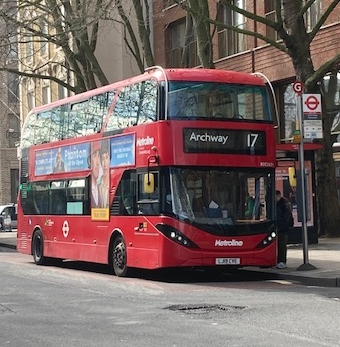
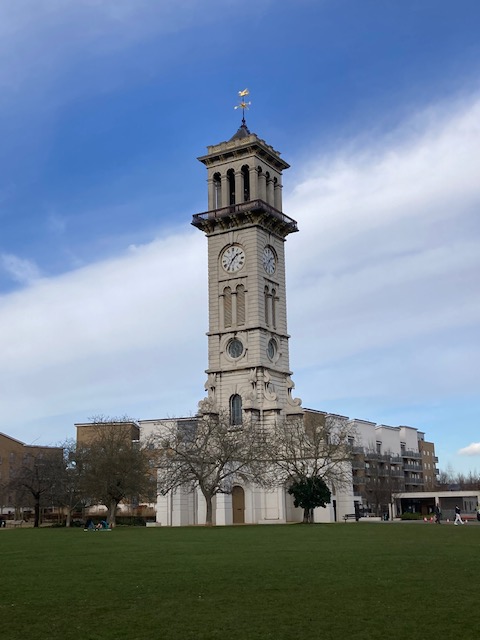
Another easy start down the northern line to pick up the bus at Archway station. I climbed upstairs and stayed on until the bus stopped at HMP Pentonville – from where I went to Caledonian Park, a large open space which is steeped in history. On 21 April 1834 tens of thousands of working men and women met at this spot to march on Westminster. The marchers were led by the trades union pioneer Robert Owen. They were protesting the unjust conviction of six rural labourers who had formed a trade union in the Dorset village of Tolpuddle. The glorious Clock Tower is the major remaining element of the Metropolitan Cattle Market, opened in 1855 by the City of London Corporation as a replacement for the market at Smithfield.


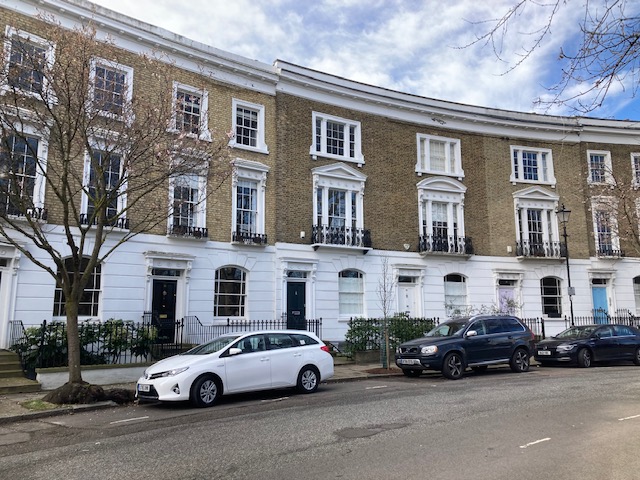
I then went back to the number 17 and stopped off at Thornhill Square, Thornhill Crescent and Gardens (bus stop Storey Street). The square and crescent date back to the mid 18th century and all houses are listed buildings. Most notable former resident is Edith Garrud, a suffragette who trained in the art of ju-jitsu. The railings around the park are the original ones and the gardens themselves, once open only to residents, are now open to the public, for a quiet stroll or a seat on the benches.


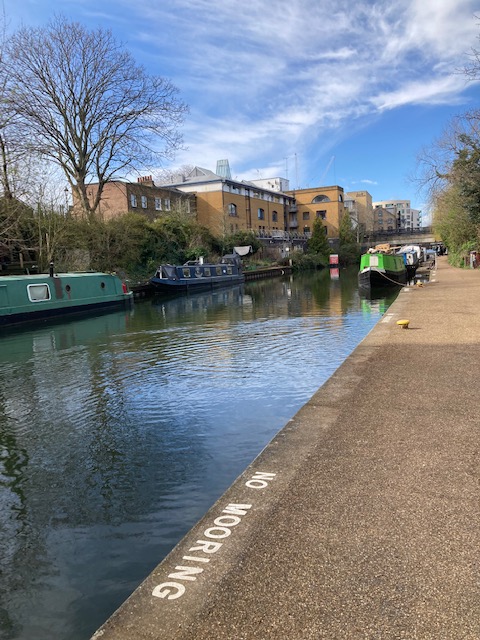
I then went to Regent’s Canal and towpath and had a short walk to see some of the barges along the way. One of them is a floating art gallery called Slash Arts, although I didn’t get to see it inside. It looks worthy of a visit on another occasion.


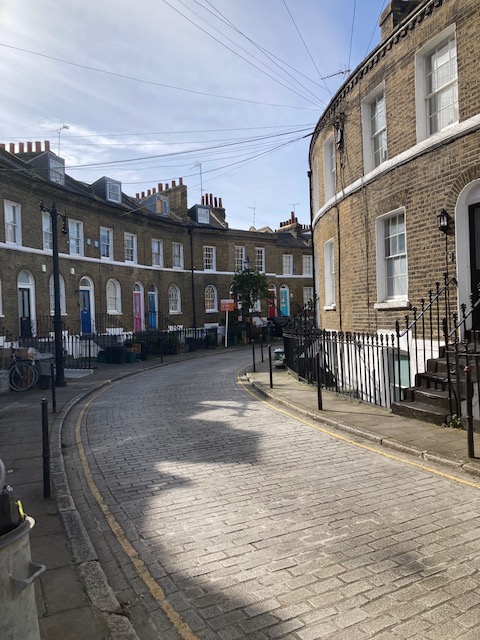
I walked a short distance towards St Pancras and Kings Cross but before I reached there, I stumbled across Keystone Crescent. It’s an elegant, complete, hidden away semi-circle of early Victorian workers’ housing. Twenty-four houses, inner and outer circles, that’s reputedly ‘the smallest radius of any crescent in Europe’ according to a board which summarises the street’s history. It hasn’t always had the best of reputations but these days, it’s a little gem of a crescent and worth a quick look.


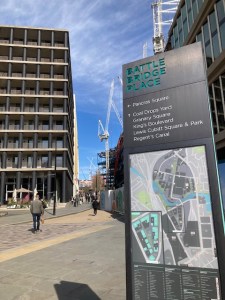
I then headed to St Pancras and to see the area still called Battle Bridge Place. It’s thought that a battle between Boudica with the Iceni against the Romans was held here in around 61 AD. Only the sign remains near Pancras Square.

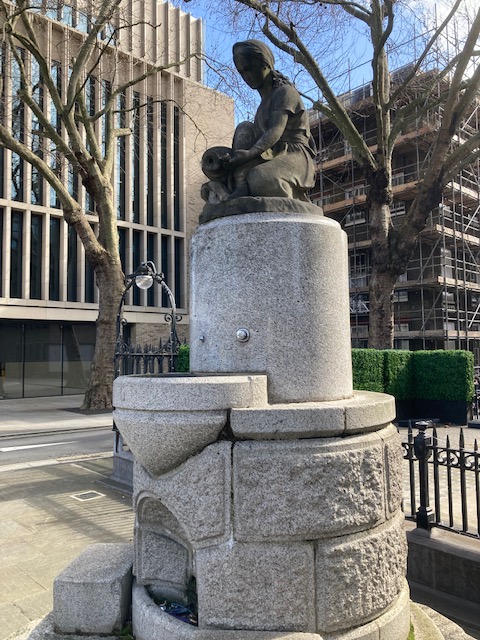
From there to Coram’s Fields, where adults are only welcomed if accompanied by a child. I just went in quickly to have a look and see the original site of the Foundling Hospital, built by Thomas Coram in 1739. Opposite the entrance to the Fields is a statue of a woman with an urn, representing the poor women of the area who were given pails to collect water from the Conduit that ran through the area.

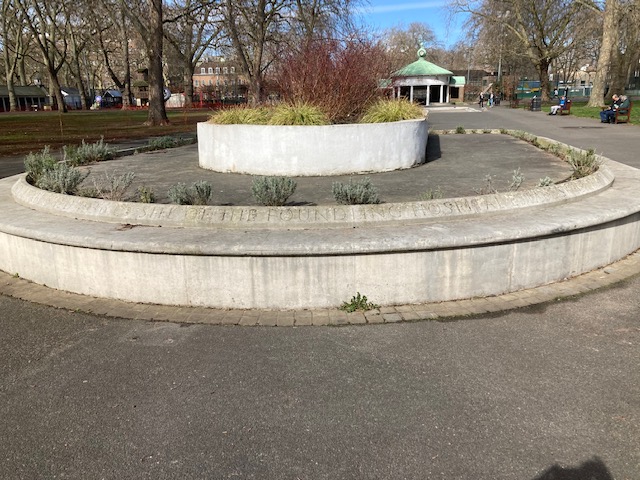
I hadn’t intended to do anything else around here, but couldn’t resist walking round to nearby Lamb’s Conduit Street, where I popped into the Langham art gallery to see some contemporary paintings. On the way back to the bus, I ventured into Doughty St (where Charles Dickens had lived) and Micklenburgh Square, both of which are pretty streets with mainly listed buildings.
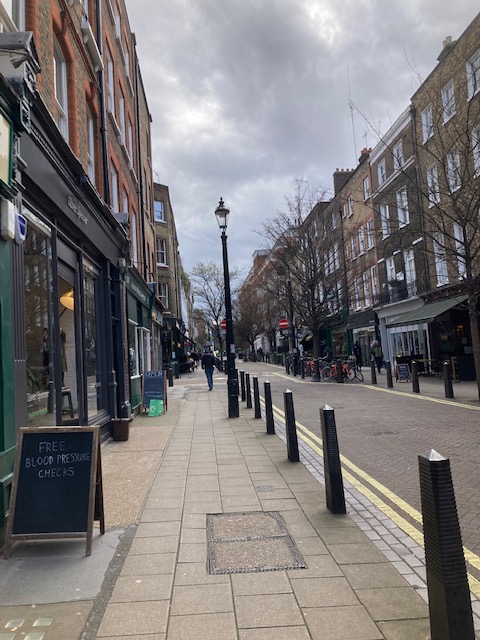


Next stop was Leather Lane market and Hatton Garden. As I arrived around lunch time, the former was buzzing with people buying street food that looked very tempting. Hatton Garden was awash with lovely jewellery shops, with plenty of sparkling diamonds on show in the windows.


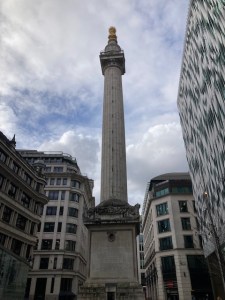
Although I am mainly doing the bus routes to find less known London places, I nevertheless couldn’t resist stopping at Monument to see it. It’s a monument to the Great Fire of London which started in 1666 in a baker’s shop in Pudding Lane. It’s a magnificent landmark and worth a visit to see how tall a structure it is and to find out about the history.

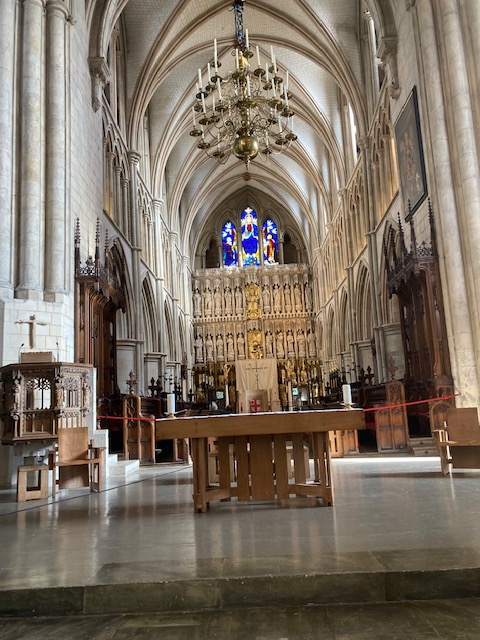
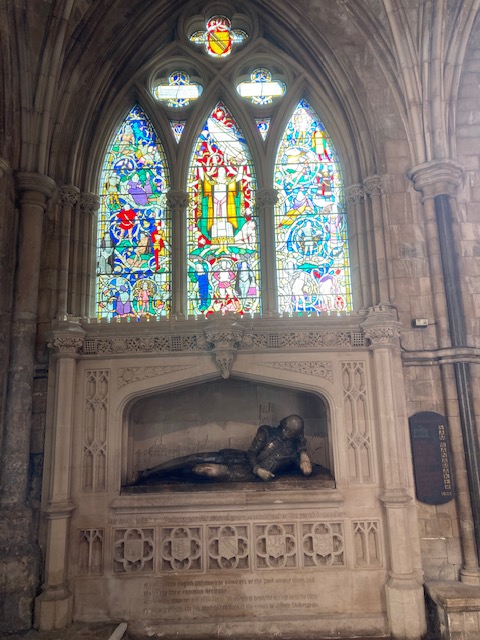
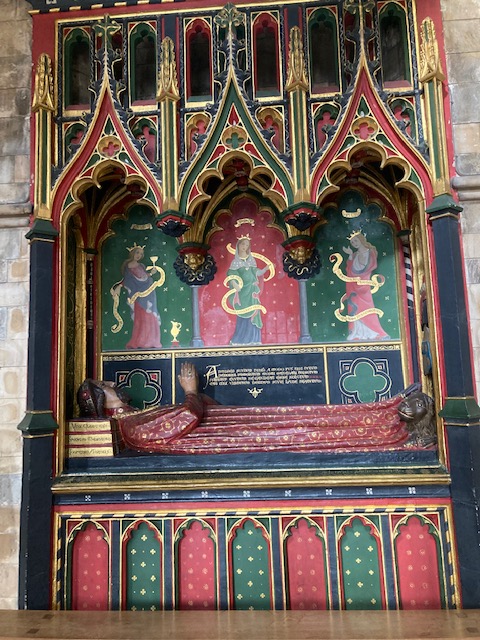
Final stop of the day was at Southwark Cathedral. Another magnificent building, it has been a place of Christian worship for more than 1,000 years, but a cathedral only since the creation of the diocese of Southwark in 1905. Following the dissolution of the monasteries by Henry VIII, it became a parish church. There is so much to see there and so much history to read that it’s worth a visit to take it all in. The most famous resident of the priory was the court poet John Gower who lived there at the start of the 15th century. He was a friend of Chaucer (of The Canterbury Tales fame) which begins in Southwark. Gower died at the priory and left a large part of his money to St Mary Overie. His beautiful tomb can be found in the nave of the Cathedral.

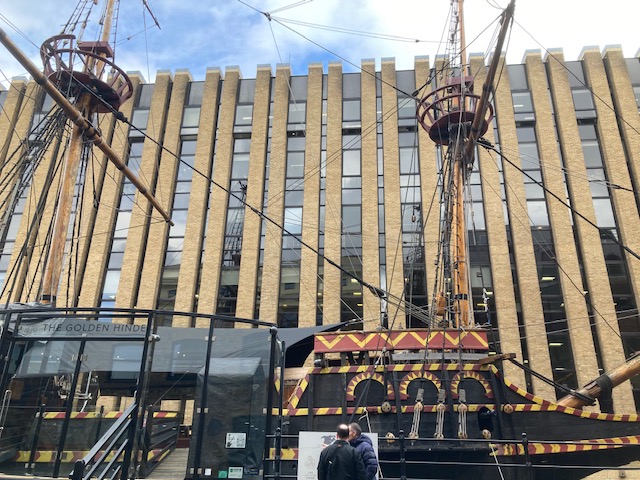
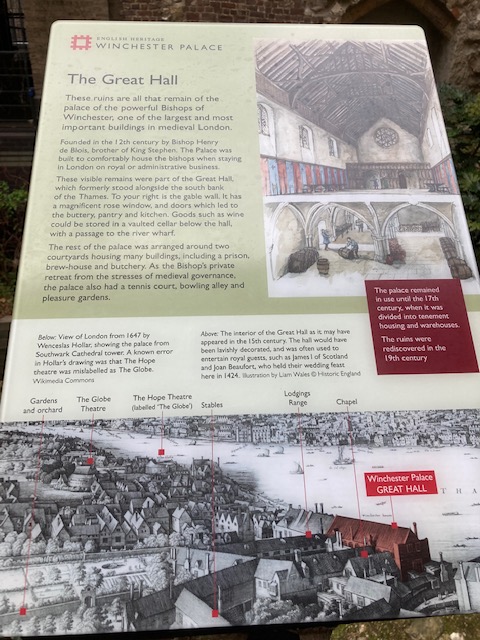
After leaving the cathedral, I quickly walked round the corner to see the reconstruction of The Golden Hinde, a galleon captained by Francis Drake in his circumnavigation of the world between 1577 and 1580. She was originally known as Pelican, but Drake renamed her mid-voyage in 1578, in honour of his patron, Sir Christopher Hatton, whose crest was a golden hind. And just round the corner are the remains of the Bishop of Winchester’s palace with a remarkable Rose Window.

This bus route was a great one with so much variety and interesting stops along the way. The highlight for me was Caledonian Park with its fascinating and previously unknown (to me) history, and Keystone Crescent, which I had just stumbled across. Finding these places make me appreciate exactly why I’m embarking on this venture.
 london routemistress