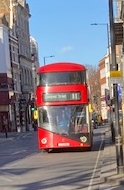
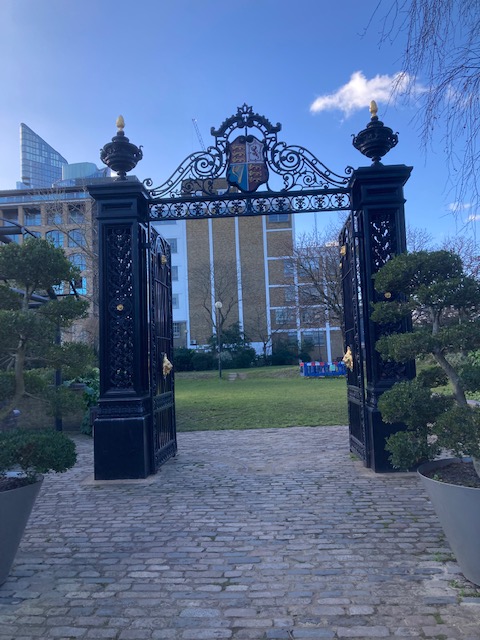
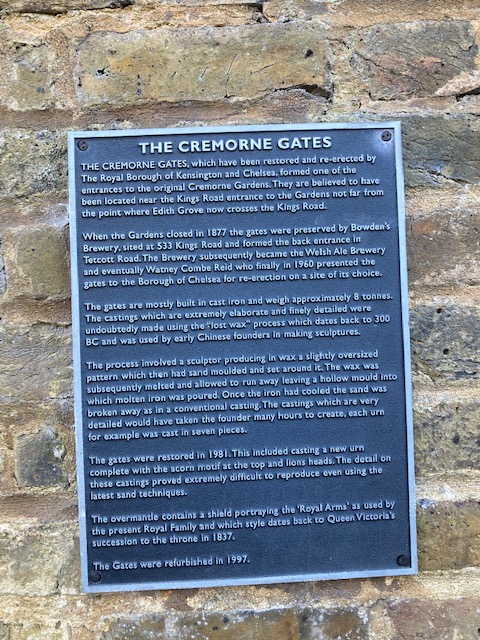
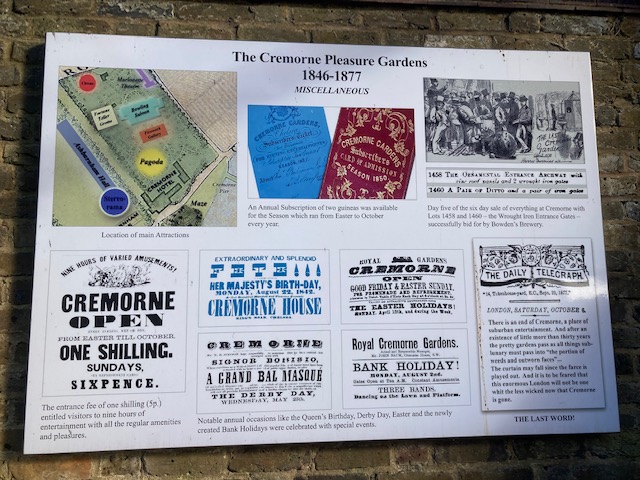
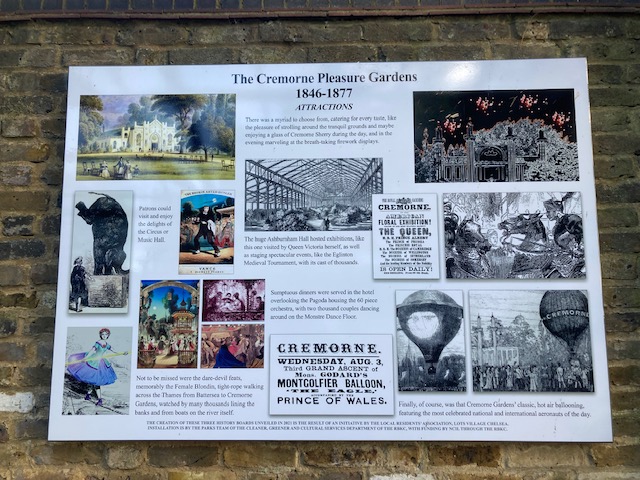
Started out on the northern line and went to Fulham Broadway via Euston and Victoria. Got on the number 11 for just a couple of stops to Edith Grove/Worlds End, to visit Cremorne Gardens. These had been Victorian Pleasure Gardens from 1846 until 1877. A beautifully restored entrance gate is still in situ.
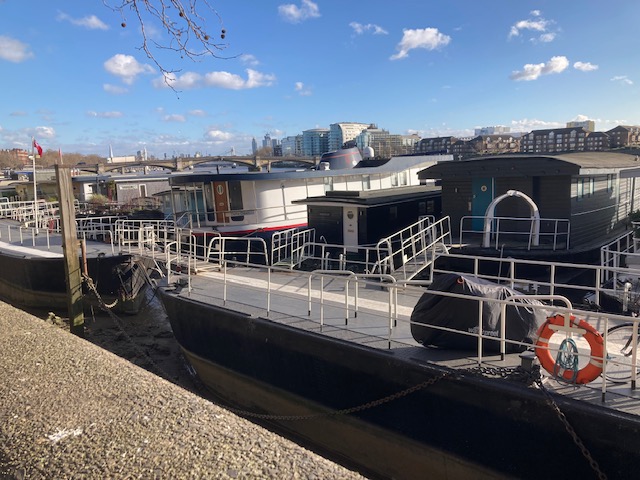
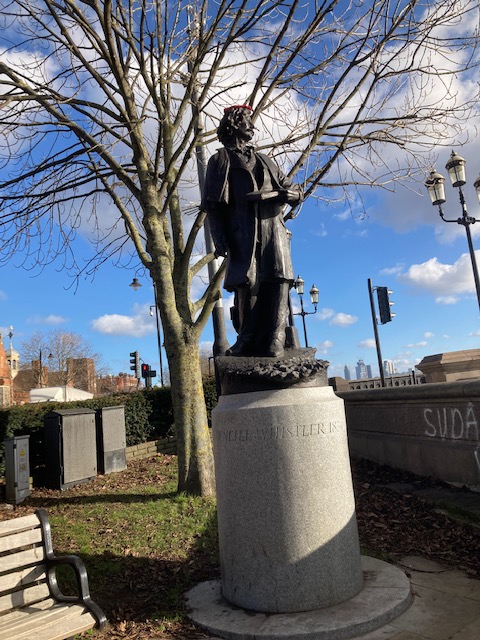
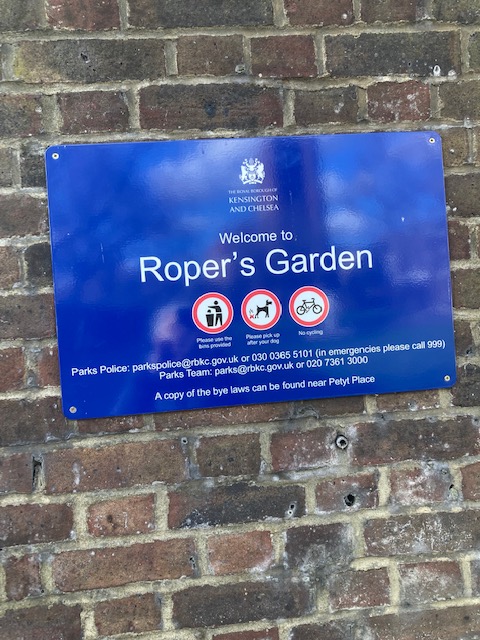
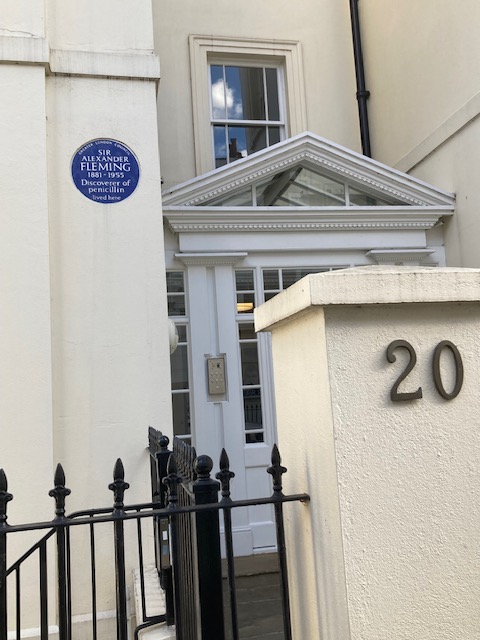
From there I walked along Chelsea Embankment where several boats are moored. I popped into Roper Gardens – this site had been a gift from Sir Thomas More to his daughter Margaret when she married William Roper in 1522. I also passed 20 Danvers St, where Alexander Fleming (of penicillin fame) had lived.
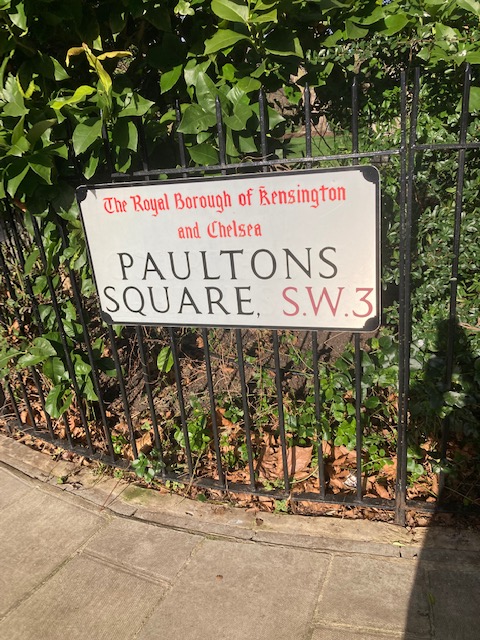
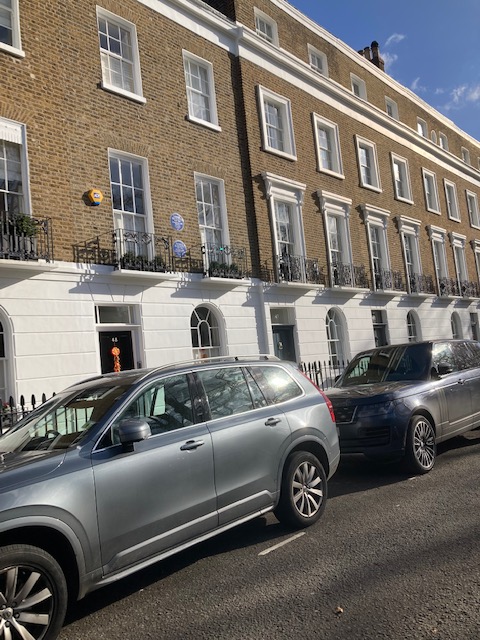
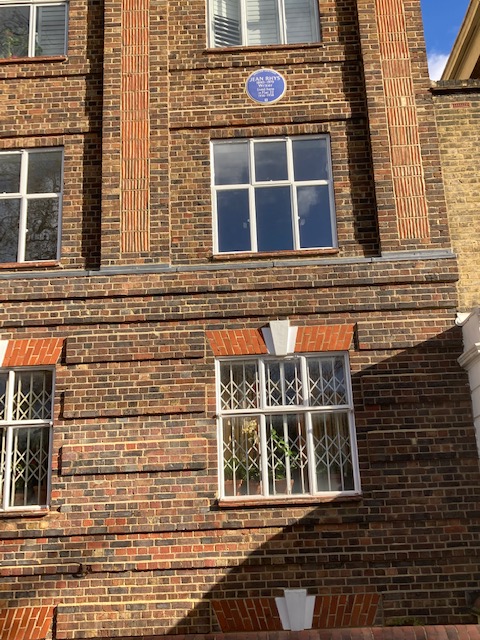
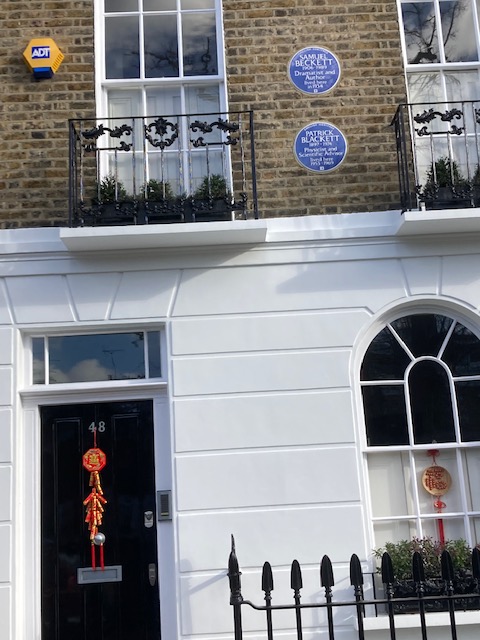
In Paultons Square there are several blue plaques for previous residents such as Jean Rhys, Samuel Beckett and Patrick Blackett who both had lived at number 48. Other residents include Augustus John and Paul Nash. It’s a lovely Georgian terraced garden square, with the garden only open to residents.
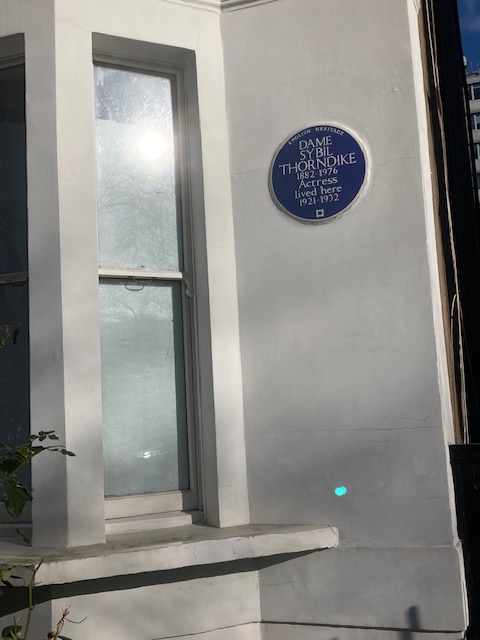
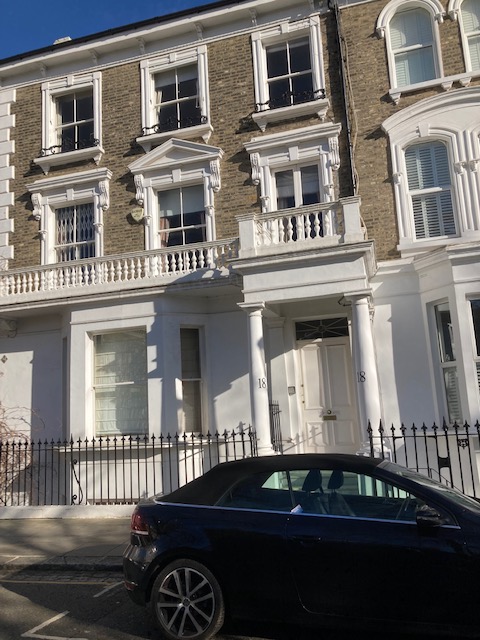
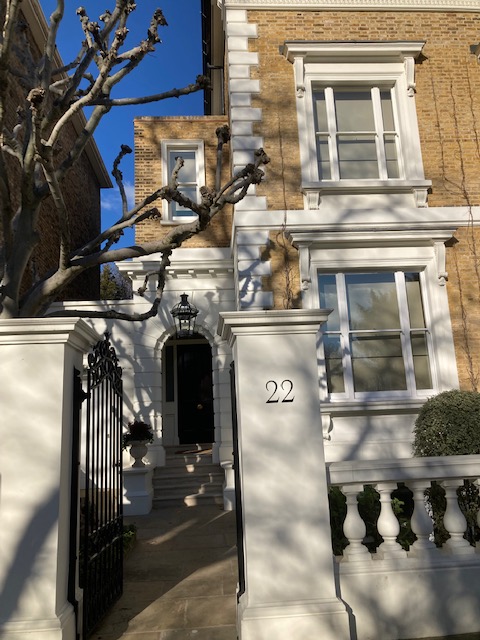
From there I got back on the bus and alighted at Carlyle Square, another Georgian terrace square with famous ex-residents – Dame Sybil Thorndike, William Walton, Kim Philby (no blue plaque for him, for obvious reasons!) – and Edna O’Brien and David Frost had both at some time lived at number 22.

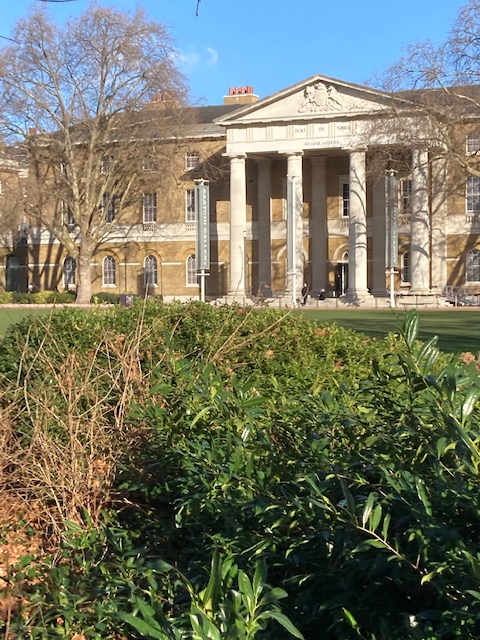
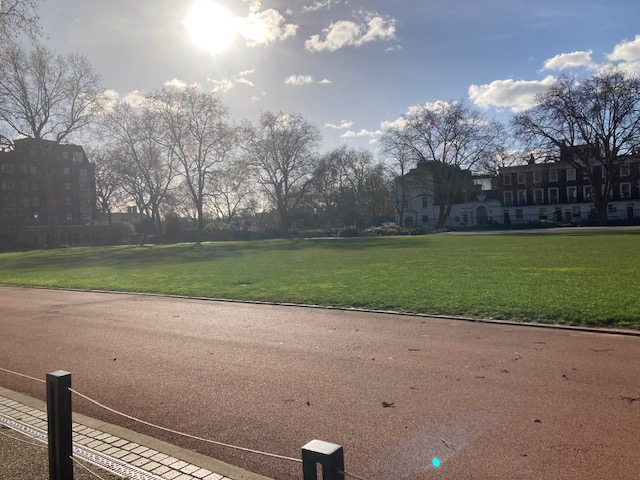
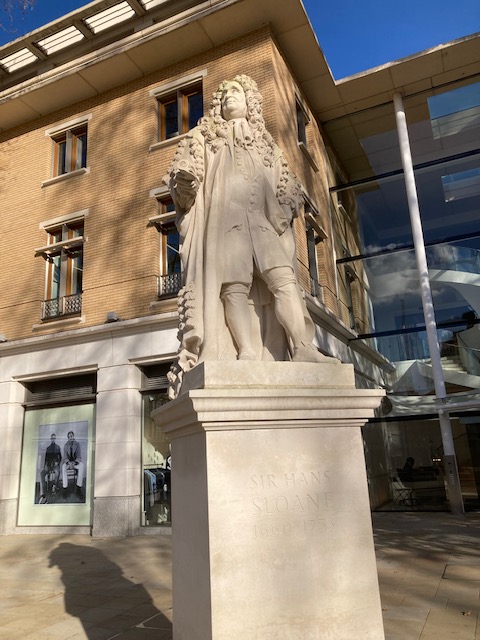
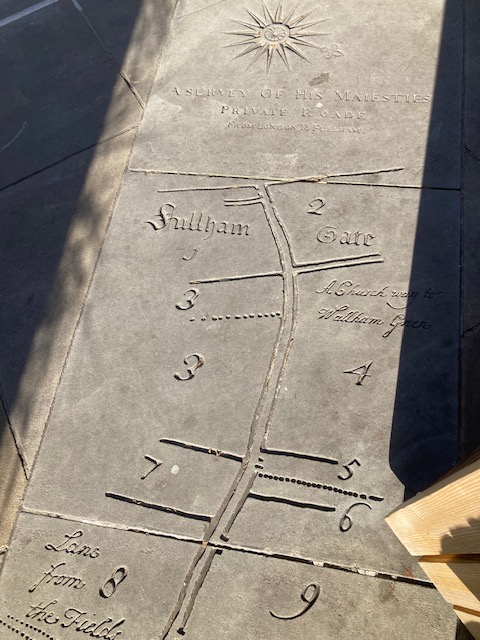
From there I went to Duke of York’s Square where the property that had been Duke of York’s HQ now houses the Saatchi Gallery. Sadly it wasn’t open today. In the square there’s a statue to Sir Hans Sloane and also a pavement pictorial drawing of “His Majesties Private Roads from London to Fulham”.
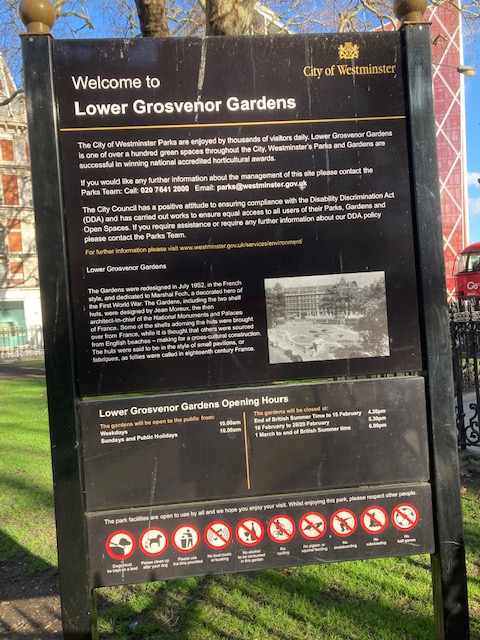
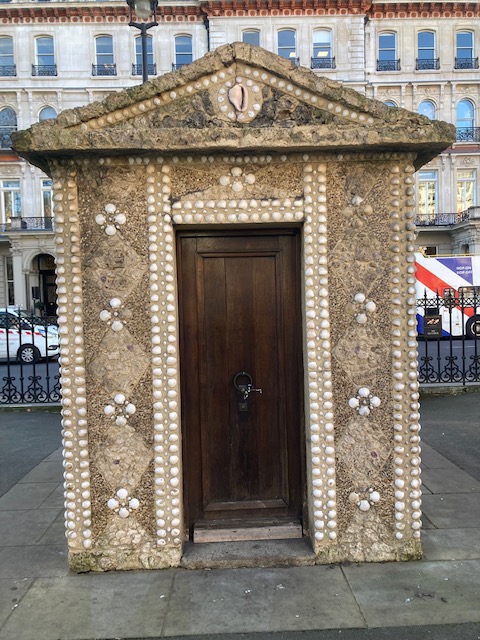
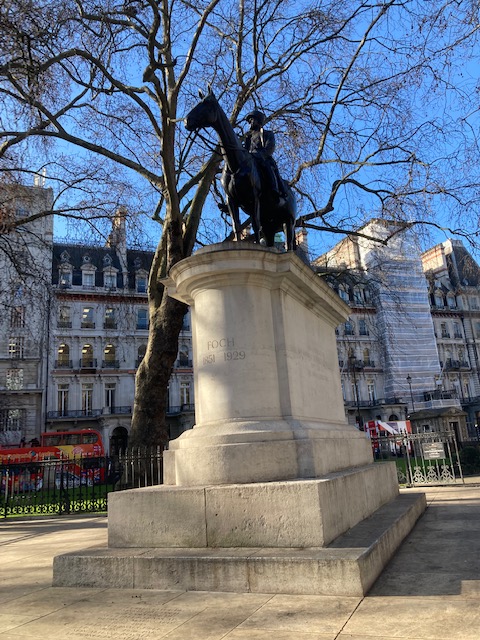
Next stop was Grosvenor Gardens which had been fairly recently (1952) renovated in the French style and dedicated to Marshall Foch. Inside the gardens are two shell huts, with the shells from both France and England.

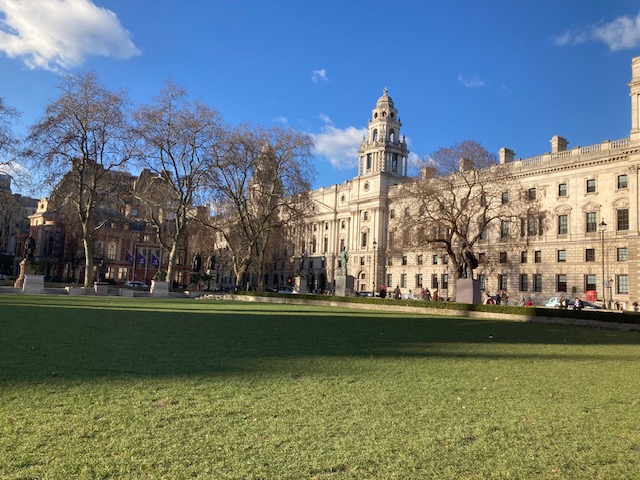
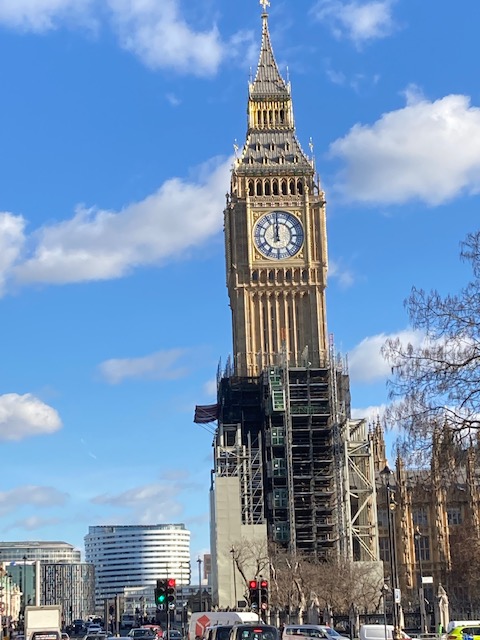
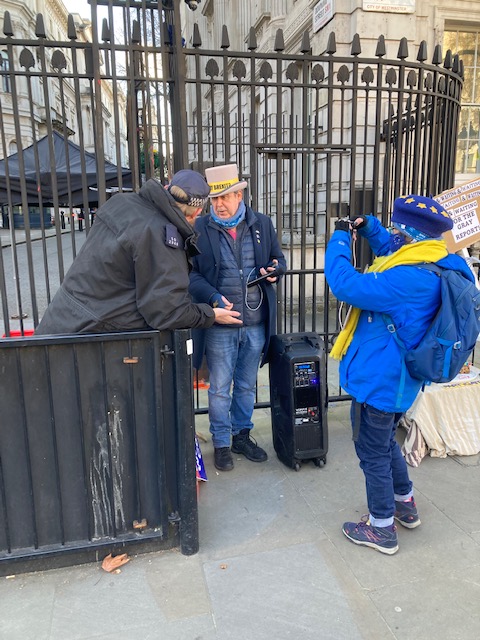
I next got off the bus at Parliament Square where there are several monuments and statues. One major monument was erected to remember the boys from Westminster school who had died in the Russian and Indian wars. Other significant statues are Abraham Lincoln, Churchill, Benjamin Disraeli. Whilst there, it was easy to see Big Ben, the top half of which has been beautifully cleaned. I walked up Parliament Street, past Horse Guards Parade and the entrance to Downing St where there were a few noisy protesters, especially as it was the day that Sue Grey’s report was being published.

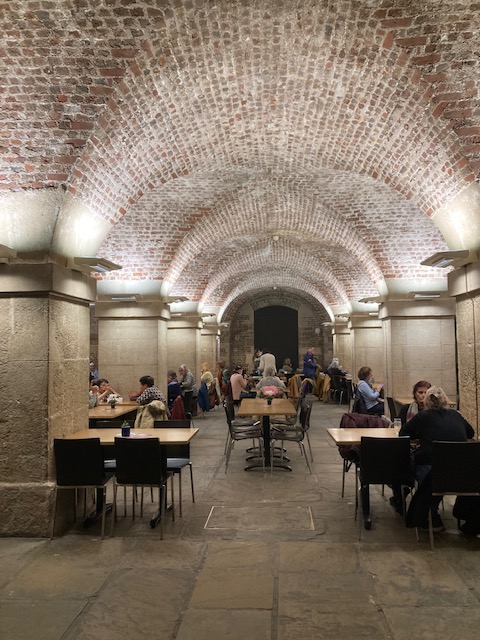
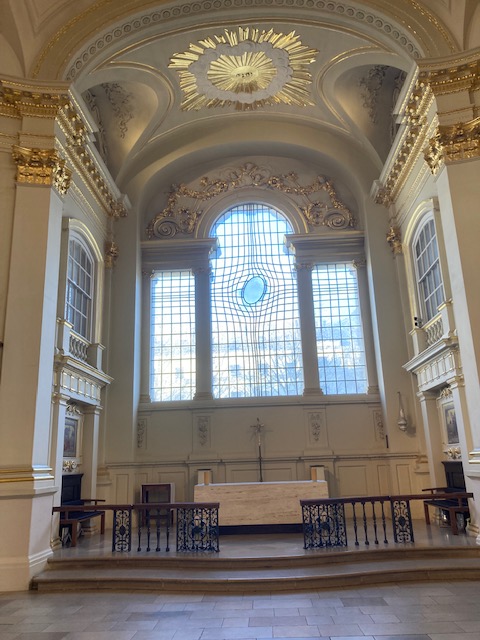
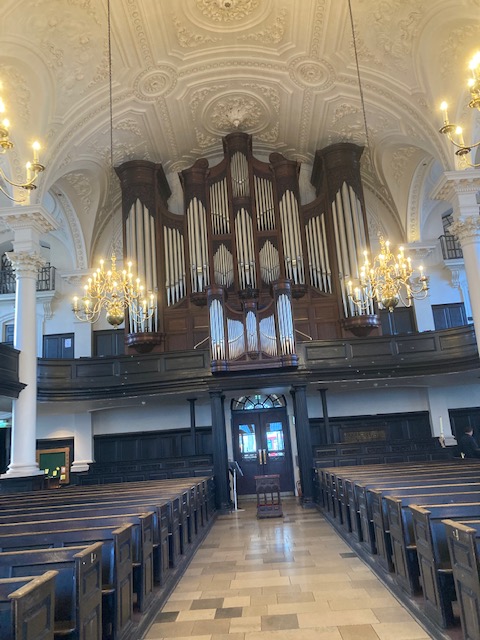
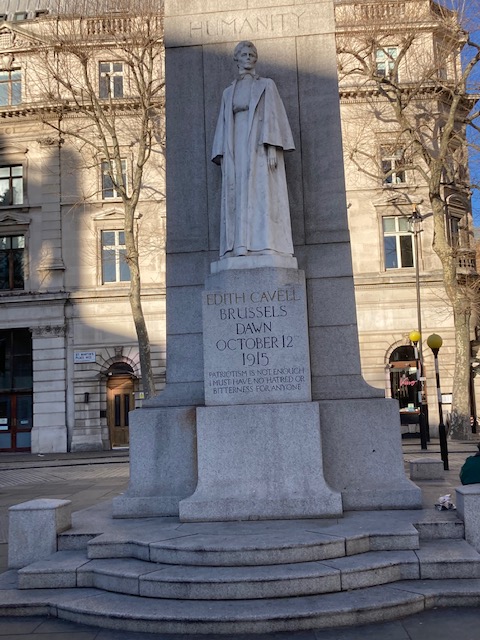
I walked up to St Martin’s in the Fields, next to Trafalgar Square. The inside of the church is lovely and I visited the café which had been the crypt. They put on concerts in the church itself so it would be great to go and hear something there. The first church on this site seems to date back to 1222. Around 1542, Henry VIII rebuilt a church here and this was pulled down in 1721, to be replaced by the existing building. Outside is a stone statue of Edith Cavell.
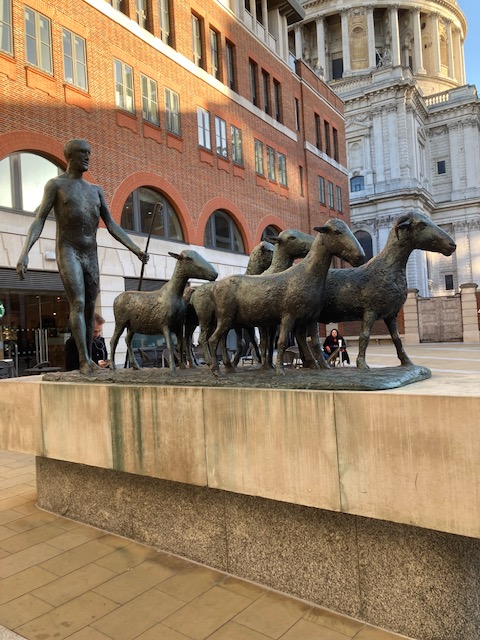
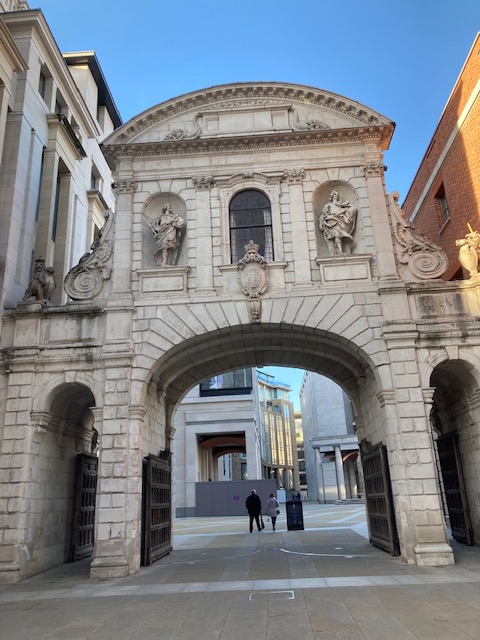
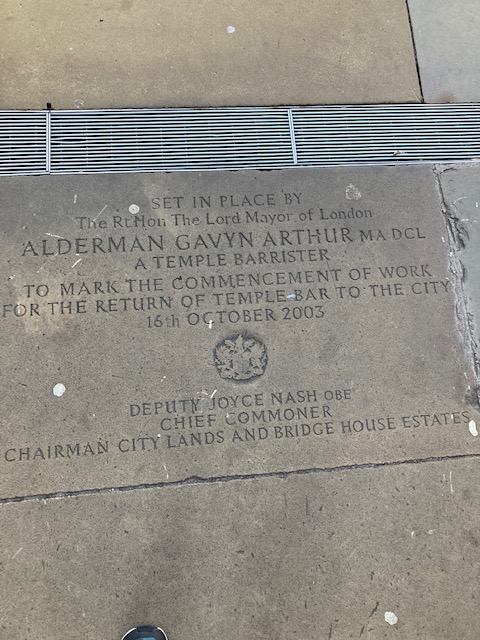
My final destination was Paternoster Square which has a large Corinthian column in the centre – it’s not obvious what its function is or why it was placed there but it’s certainly magnificent. The main reason for my coming to this square was to see the Temple Bar Gate, which had been designed by Sir Christopher Wren around 1670. It’s a stone archway and is the last remaining gateway to London. Temple Bar was the most used of these, since traffic between the City of London (England’s prime commercial centre) and the Palace of Westminster (the political centre) passed through it. It was located where Fleet Street now meets The Strand, which is outside London’s old boundary wall.

And so back on the bus till the end of the route at Appold Street near Liverpool St station.
The highlights today were St Martin’s in the Fields and Temple Bar Gate. I’m getting to discover a lot of history through travelling on the bus routes of London.
 london routemistress